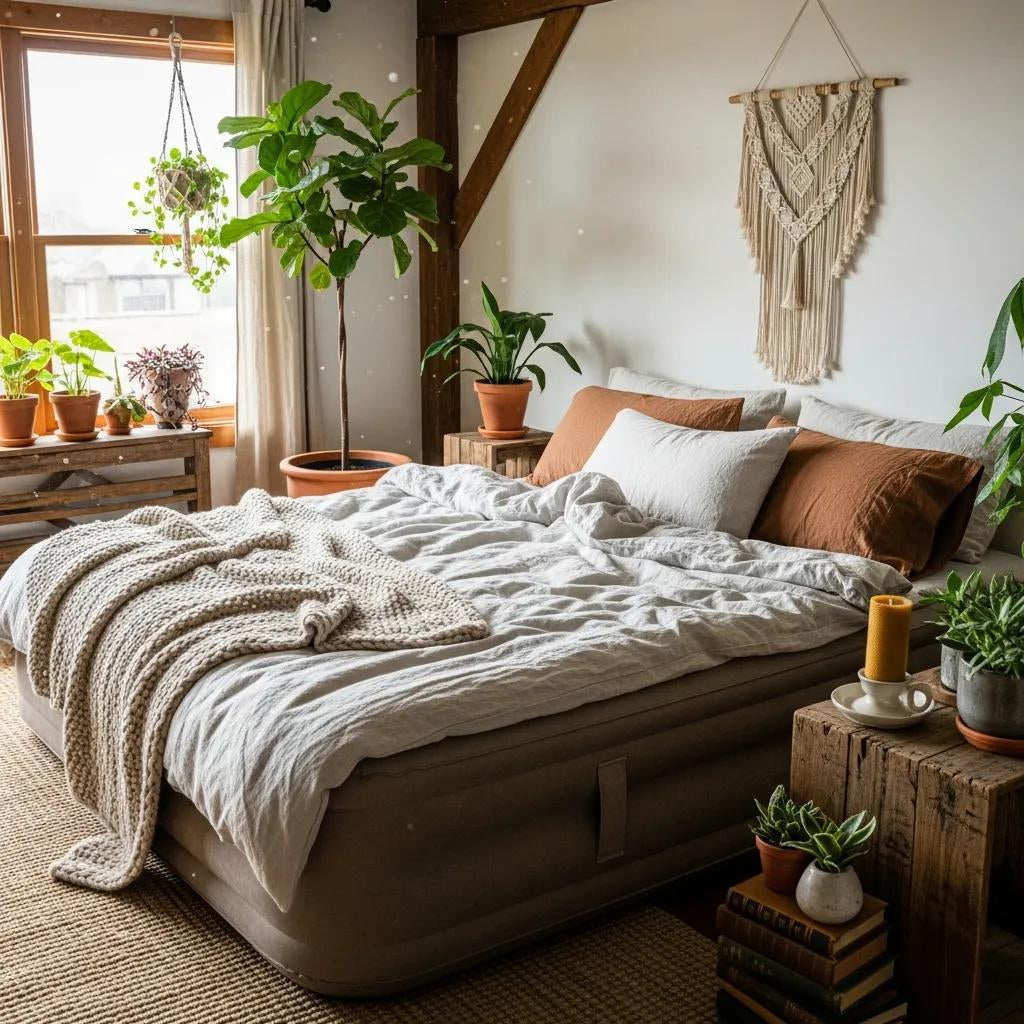
Why choose eco-friendly air mattresses for lasting sleep: durable, non-toxic and more sustainable
An eco-friendly air mattress uses materials and production choices that cut environmental harm while still giving you reliable comfort. Alternatives to traditional PVC—like TPU shells or a natural-latex comfort layer—are better at resisting punctures, keep toxic emissions low, and open up cleaner end-of-life options. This guide breaks down how material choices, construction details and everyday care extend an inflatable bed’s useful life and improve indoor air quality by avoiding PVC-related VOCs. You’ll get clear comparisons (TPU vs PVC vs natural latex and recycled options), practical checklists, repair and storage tips, and side-by-side tables to help you make a sustainability-first purchase that lasts.
What makes an air mattress eco-friendly and durable?
A truly eco-friendly, long-lasting air mattress blends low-toxicity materials with strong construction and easy repair options. On the build side, that means thicker, abrasion-resistant top layers, welded or RF-sealed seams, reinforced valve systems and rugged bases that stand up to everyday use. From an environmental view, it means PVC-free polymers, natural or certified textile covers, and parts that are easier to recycle or repurpose. Together, those choices keep the mattress performing year after year, reduce replacement frequency and lower the overall waste and emissions compared with cheap, PVC-heavy options. Below, we compare common materials so you can see the trade-offs at a glance.
Common inflatable bedding materials each bring different durability and environmental features:
| Material | Key Durability Attribute | Sustainability / Impact |
|---|---|---|
| TPU (Thermoplastic Polyurethane) | High puncture and abrasion resistance; stays flexible across temperatures | PVC-free, lower VOCs in use, potentially recyclable where facilities exist |
| PVC (Vinyl) | Inexpensive and easy to form; seam strength varies by manufacturing | Often contains phthalates, higher VOCs, is hard to recycle and problematic at disposal |
| Natural latex (face layer) | Resilient surface that helps distribute pressure; good tear resistance when bonded to a strong backing | Biobased and renewable; may be biodegradable under certain conditions when responsibly sourced. |
| Recycled plastics (blended shell) | Strength varies with feedstock and processing quality | Reduces virgin material use, but recyclability depends on additives and local streams |
The takeaway: TPU and latex-faced constructions usually outlast PVC and produce fewer long-term environmental problems. Repairability and recycling options are the other crucial factors when judging true durability.
Which sustainable materials are used in eco-friendly air mattresses?
Most eco-minded air mattresses favour TPU, natural latex, recycled polymer blends and certified textile covers to balance strength and lower toxicity. TPU is the most common PVC alternative because it resists abrasion, stays flexible and typically emits fewer VOCs during use—so you get fewer leaks and better seam performance. Natural latex, used as a comfort layer or laminate, brings bounce and pressure relief while offering a renewable option when sourced responsibly. Recycled plastics can lower virgin-resource use, but their benefits depend on feedstock purity and local recycling pathways. Textile covers made from organic cotton or bamboo fibres add breathability and a lower-impact non-plastic surface. Look for brands that disclose sourcing and end-of-life options—transparency matters for real sustainability.
How does durability affect how long an eco air mattress will last?
Durability is the biggest factor in how long an air mattress will remain useful. Design choices—thicker TPU layers, welded seams instead of glued joins, reinforced valve housings and multi-layer laminates—reduce common failure points like seam splits, slow leaks and punctures. Low-cost PVC units often fail after a few seasons, while well-made TPU or latex-enhanced models that are repairable and cared for can last many years. The availability of repair kits also matters: brands that support repairs make it realistic to fix rather than replace. By prioritising construction features that prevent common failures, you lower lifetime environmental impact and get better value.
Why are PVC-free and non-toxic air mattresses important for health and the planet?
Choosing PVC-free, non-toxic materials matters because it reduces indoor pollution and avoids harmful additives. PVC often needs plasticisers such as phthalates to stay flexible; those additives and the polymer itself can off-gas volatile organic compounds (VOCs) that affect indoor air quality. PVC production and disposal also create persistent waste streams and environmental harm that PVC-free alternatives avoid. Opting for non-toxic materials lowers health risks and supports a cleaner lifecycle from manufacture through disposal.
- Health and environmental benefits of PVC-free designs include: Cleaner indoor air with fewer VOCs during use. Lower exposure to phthalates and other plasticisers linked to endocrine concerns.Better disposal or recycling options when materials are chosen for circularity.
What are the health benefits of choosing PVC-free air mattresses?
Picking a PVC-free air mattress reduces exposure to indoor pollutants like phthalates and certain VOCs, which can cause headaches, respiratory irritation and other health worries. Materials such as TPU and natural-latex-faced surfaces tend to give off fewer smells and airborne chemicals, improving the sleep environment—especially for sensitive people, children or allergy sufferers. Hypoallergenic covers with OEKO-TEX or similar certification cut down on chemically treated textiles and finishes, lowering the chance of skin irritation. Overall, PVC-free mattresses help create a safer, fresher bedroom.
How do certifications like CertiPUR-US and OEKO-TEX help assure mattress safety?
Certifications give independent confirmation of material safety and manufacturing practices, so you can separate genuine low-toxicity products from unlabeled claims. CertiPUR-US tests foam for harmful substances, emissions and durability. OEKO-TEX evaluates textile components for restricted substances and broader health and ecological criteria. Look for these labels on covers, foams or toppers to confirm lower VOC emissions and restricted chemical use. While certifications don’t cover every sustainability metric, they’re a practical tool to verify chemical safety and manufacturing transparency.
How to choose the best long-lasting, eco-friendly air mattress
To pick a long-lasting, eco-friendly air mattress, focus on five practical criteria that predict durability and lower environmental impact. Start with material (prefer TPU or latex-faced surfaces), then review construction quality (welded seams, reinforced valves), strong support and repair policies, how repairable the mattress is and whether trustworthy certifications back its low-toxicity claims. Together, these indicators show whether a model is built to last rather than be replaced quickly. Use the short checklist below when comparing options, followed by a quick feature comparison to guide your decision.
Use this checklist to prioritise longevity and sustainability when you shop:
- Material & construction: Prefer TPU or latex-faced tops and welded seams.
- Strong support: Look for clear service information and accessible repair help.
- Repairability: Check that valves and patch kits are available or included.
- Certifications & transparency: Look for OEKO-TEX, foam safety marks and open material disclosure.
- Protective ecosystem: Consider compatible protectors or toppers to reduce wear.
This quick guide helps you spot durable, sustainable designs rather than cheap, disposable alternatives.
| Feature | What to Check | Longevity Indicator |
|---|---|---|
| Shell Material | TPU, latex or recycled polymer details | TPU and latex → higher durability |
| Construction | Welded seams, reinforced base, valve design | Robust joints reduce leaks |
| Warranty & Support | Commitment to longevity, repair policy | Strong support indicates confidence |
| Repairability | Availability of patch kits and spare valves | Easier repair extends life |
| Certifications | OEKO-TEX, foam safety, material transparency | Confirms low toxicity and safer use |
What features should you look for in a durable eco air mattress?
When judging durability, look for material thickness and type, thoughtful seam and valve engineering, strong support and clear repair paths. Thicker TPU layers resist punctures and abrasion, while welded or RF-sealed seams are less likely to leak than glued joins. Robust, replaceable valves and included repair patches — or easy access to spare parts — are essential for long service life. A clear commitment to longevity and repair/replacement policies signals that a brand expects its product to last. Certifications add independent assurance about chemical safety and performance. Prioritising these features keeps replacements rare and environmental costs low.
How does Adore Earth’s sustainability focus inform mattress quality?
At Adore Earth, we centre sustainability, comfort and longevity across our organic bamboo bedding and sleep accessories. Those same principles are the benchmark you should use when choosing an air mattress. Ethical sourcing, clear manufacturing practices and a small footprint are signs a brand takes durability seriously. While Adore Earth doesn’t sell air mattresses today, our bamboo sheet sets, quilt covers, toppers, protectors and pillows show how sustainable textiles and protective layers can extend mattress life and keep sleep spaces healthier. Use those product categories as a model when assessing mattress features that matter for lifespan and impact.
How can you maintain and extend the life of your eco-friendly air mattress?

A little care goes a long way. Regular checks, correct inflation and prompt repairs will stretch an eco mattress’s life and cut down the chance of early replacement. Inflate to the manufacturer’s recommended pressure to avoid seam stress, clean with mild, non-toxic cleaners to protect the surface and indoor air quality, and store the mattress in a cool, dry place away from direct sunlight and sharp objects. When punctures happen, patch them quickly with the manufacturer’s kit or a TPU-compatible repair; that keeps the mattress in service rather than in waste. Below are simple steps to help you protect your inflatable bedding.
Follow these best-practice steps to inflate, store and repair an air mattress:
- Inflation: Inflate to the manufacturer-specified firmness; avoid over-inflation, which stresses seams.
- Cleaning: Use mild, pH-neutral cleaners and a soft cloth; avoid harsh solvents on TPU or latex surfaces.
- Storage: Fully deflate, clean, dry and store flat in a breathable bag away from heat and sunlight.
- Repair: Carry a patch kit; for slow leaks, use a soap-and-water test to find punctures, then follow patch instructions.
- Protection: Use a breathable mattress protector and a topper to reduce surface abrasion and soiling.
These habits reduce wear, preserve comfort and cut replacement frequency — saving you money and reducing environmental impact over the mattress’s life.
Aftercare accessories help too. Our organic bamboo toppers and protectors shield surfaces from wear and moisture, reducing cleaning and abrasion. A good protector and breathable topper take stress off the shell and help your mattress last longer with healthier use.
What are the best practices for inflating, storing and repairing air mattresses?
Correct inflation, careful storage and timely repair prevent common failures and keep materials performing longer. Stick to the recommended pressure and check for even firmness across the surface to avoid localised overstretching. Clean and fully dry the mattress before storage to prevent mould, and fold or roll it as the manufacturer suggests to protect seams and valves. For repairs, locate leaks with a soap-and-water test, use adhesive and patch material that matches the shell (TPU patches for TPU materials), and allow full cure time before reinflating. Keeping a simple maintenance log helps you schedule checks and track repairs so problems don’t sneak up on you.
How does proper care reduce environmental impact and waste?
Every extra year you get from a mattress cuts the number of replacements needed and lowers the raw materials, production energy and transport emissions tied to new units. Repair and reuse are core circular strategies: patched or component-repaired mattresses stay in use rather than becoming waste. Modular or repairable designs make those strategies feasible. For consumers, a longer-lasting mattress lowers lifetime cost and reduces environmental footprint — a small change at home that adds up for the planet.
What are the environmental benefits of choosing eco-friendly air mattresses?
Eco-friendly air mattresses reduce harmful additives, lower VOC emissions during use, and open better end-of-life options like recycling or material recovery. Materials such as TPU and responsibly sourced natural latex generally produce fewer hazardous waste issues than PVC. Durable, repairable designs also cut replacement frequency, shrinking the embodied carbon and transport emissions tied to repeated purchases. Mapping materials to outcomes makes the trade-offs clear so you can choose the combination with the best net benefit.
| Material Type | Environmental Outcome | Expected Lifespan / Notes |
|---|---|---|
| TPU shell | Lower VOCs in use; better recycling potential than PVC | Longer service life with fewer replacements |
| Natural latex (top layer) | Renewable source; can biodegrade under certain conditions | Adds resilience and may lower lifecycle impact when certified |
| PVC shell | Higher disposal impacts; persistent pollutants | Shorter practical lifespan and problematic recycling |
| Recycled polymer blends | Reduces virgin material use; recycling complexity varies | Good when the feedstock is clean, and the design supports disassembly |
How do eco materials like TPU and natural latex reduce carbon footprint?
TPU and natural-latex choices can lower a mattress’s per-year footprint by lasting longer and avoiding frequent replacements. TPU’s toughness reduces failure rates, so fewer new units are needed over time; spreading production impacts across a longer service life usually lowers emissions per year. Responsibly sourced natural latex leverages a renewable feedstock and can be easier to manage at disposal than many synthetics. It’s important to weigh production and sourcing impacts alongside lifespan and end-of-life outcomes to decide the best net-climate option.
What are the end-of-life solutions for sustainable air mattresses?
End-of-life options include manufacturer take-back programmes, modular disassembly for recycling, patch-and-keep repairs, and donation or repurposing for secondary use. Recycling pathways depend on materials: TPU and clean thermoplastic blends may be recyclable where facilities exist; natural-latex components can be composted in industrial systems if uncontaminated. Designs that allow valves and layers to be separated make it easier to recover higher-value materials. Prioritise brands that disclose take-back policies and design for disassembly to get the most sustainable disposal outcomes.
- Manufacturer take-back: The preferred option when available — it keeps materials in recovery streams.
- Repair & reuse: Patch kits and component replacement extend life and delay disposal.
- Repurposing: Use older mattresses for guests or pets to get more value before recycling.
Frequently asked questions
What are the key differences between TPU and PVC in air mattresses?
TPU (thermoplastic polyurethane) and PVC (polyvinyl chloride) behave differently in durability and environmental impact. TPU offers higher puncture and abrasion resistance and stays flexible across a wider temperature range, which tends to make it longer lasting. PVC is cheaper and easier to mould, but often contains additives like phthalates that can off-gas VOCs. Choosing TPU usually means a more durable mattress with a smaller footprint in use and disposal.
How can I identify a truly eco-friendly air mattress?
Look for clear certifications, transparent material disclosure, and obvious repairability (patch kits, replaceable valves). Prefer TPU, natural latex or responsibly recycled polymers and check whether the brand offers take-back or recycling information. Customer reviews about real-world durability are also helpful when assessing claims.
What maintenance practices can help prolong the life of my air mattress?
Inflate to the recommended pressure to avoid seam stress, clean with gentle, non-toxic products, and store the mattress clean and dry in a cool, shaded place. Use a breathable protector and topper to prevent abrasion and soiling, and patch leaks promptly with the right repair kit. These steps keep your mattress comfortable and reduce the likelihood of early replacement.
Are there specific brands known for producing high-quality, eco-friendly air mattresses?
Several brands have moved toward TPU and natural-latex designs that prioritise durability and lower toxicity. Names you may see include SoundAsleep, REI and Coleman among mainstream options. Always check each brand’s material transparency, certifications and customer feedback to make sure a model aligns with your sustainability and quality priorities.
What are the environmental impacts of disposing of traditional air mattresses?
Traditional air mattresses — especially those made from PVC — can cause long-term disposal problems. PVC is persistent in waste streams, often releases harmful chemicals during production and disposal, and is hard to recycle. Eco-friendly alternatives like TPU or natural latex offer better end-of-life pathways, such as recycling or industrial composting, reducing overall impact.
How do I choose the right size air mattress for my needs?
Pick the size based on how many people will sleep on it and how much room you have. Common sizes are twin, full, queen and king. A twin or full is fine for solo sleepers or kids; couples usually prefer a queen or king. Don’t forget to check mattress height and thickness for ease of use, and to measure your space before buying.