



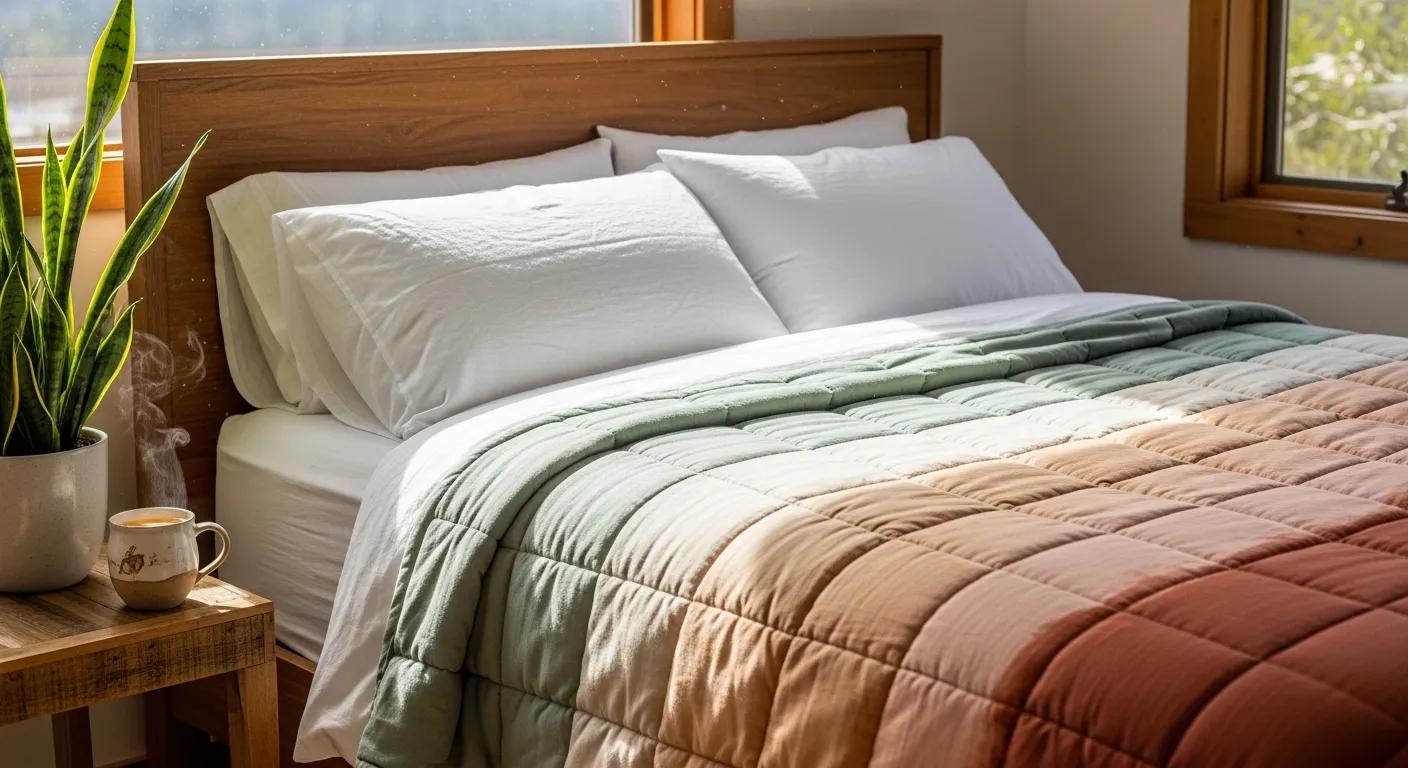
More Australians are switching to eco-friendly weighted blankets — and for good reason. These blankets combine calming pressure with sustainable materials, so you can sleep better and feel good about the choices you make. This guide walks through the benefits, the common materials used, and what to look for when buying, whether you’re easing anxiety or just chasing a deeper night’s sleep.
What Are Eco-Friendly Weighted Blankets and Why They Matter in Australia
Eco-friendly weighted blankets deliver the same cosy, calming pressure as regular weighted blankets but are made with a lower environmental impact in mind. That means responsibly sourced fabrics, non-toxic fills, and production methods that cut waste and energy use — a fit for Australian values around sustainability and wellbeing.
What Makes a Weighted Blanket “Eco-Friendly”?
An eco-friendly weighted blanket typically uses sustainable outer fabrics like organic cotton or bamboo and fillings such as recycled glass beads. Look for third‑party certifications and non-toxic finishes. Responsible makers also design for durability and repairability, so the blanket lasts longer and creates less waste.
Growing consumer demand for safer, greener textiles has helped fuel eco-labels and organic certifications.
How Eco-Friendly Weighted Blankets Cut Environmental Impact
Traditional bedding can use lots of water, chemicals and non-recyclable materials. Eco-friendly blankets reduce that footprint by using organic fibres, low-impact dyes and recycled fills like glass beads. Choosing them helps lower waste and supports a more circular approach to textiles in Australia and beyond.
How Eco-Friendly Weighted Blankets Help Sleep and Ease Anxiety
Weighted blankets help many people sleep better and feel calmer by applying gentle, even pressure. That sensation — often described as a reassuring hug — encourages the body to relax, which can be especially useful for people with stress, anxiety or restless sleep.
What Is Deep Touch Pressure Stimulation and Why Does It Help
Deep Touch Pressure Stimulation (DTPS) is the gentle pressure a weighted blanket provides. DTPS can prompt the release of calming neurotransmitters such as serotonin and dopamine, helping lower anxiety and support better sleep. For many users, this simple, non-medical approach fits naturally into an evening routine.
Deep pressure has been shown to help modulate anxiety for many people.
How Weighted Blankets Influence Serotonin, Melatonin and Cortisol
By promoting calm, weighted blankets can support natural shifts in hormones tied to sleep and stress — lifting serotonin and melatonin while helping to reduce cortisol. These hormonal changes can make it easier to fall asleep and stay asleep, improving overall sleep quality.
Appropriate pressure may increase melatonin and support sleep onset.
Which Sustainable Materials Are Common in Eco-Friendly Weighted Blankets?

The fabric and filling choices determine comfort, breathability and sustainability. Below are the most common materials you’ll see and why they’re used.
Why Pick Organic Cotton or Bamboo?
Organic cotton is breathable, gentle on sensitive skin and grown without harmful pesticides. Bamboo fabric feels soft, wicks moisture and can add a cool, comfortable sleep surface. Both are popular in eco-friendly blankets for their lower environmental toll and everyday comfort.
Why Recycled Glass Beads Are a Smart Fill
Recycled glass beads provide consistent, even weight distribution and are a greener alternative to plastic pellets. They’re durable, don’t clump easily and keep materials in use rather than sending them to landfill — a practical choice for sustainability-focused bedding.
| Material Type | Benefits | Environmental Impact |
|---|---|---|
| Organic Cotton | Breathable, hypoallergenic | Grown without pesticides, with less water usage |
| Bamboo | Soft, moisture-wicking | Fast-growing, requires less water |
| Recycled Glass Beads | Even weight distribution | Reduces waste, supports recycling |
How to Choose the Best Eco-Friendly Weighted Blanket in Australia
Picking the right blanket comes down to weight, size, materials and care. Focus on what helps you sleep comfortably while matching your values for sustainability and safety.
What’s the Right Weight and Size for You?
A useful rule of thumb is to choose a blanket around 10% of your body weight, plus or minus 1 kg. That gives enough pressure to feel comforting without being restrictive. Consider the blanket’s dimensions too — whether you prefer a personal throw or a cover for your bed will affect your choice.
Caring for Your Eco-Friendly Weighted Blanket
Follow the manufacturer’s care instructions to keep your blanket in top condition. Many eco-friendly blankets can be machine-washed on a gentle cycle; some require spot cleaning or professional care, depending on materials. Avoid harsh detergents and fabric softeners to protect natural fibres and recycled fills.
Why Choose Adorearth for Eco-Friendly Weighted Blankets in Australia?
At Adorearth, we blend sustainable materials with thoughtful design so you get the calming benefits of a weighted blanket without compromising on planet-friendly choices. Our collections focus on proven comfort, responsible sourcing and long-lasting quality.
How Adorearth Balances Sustainability with Therapeutic Benefits
Our blankets pair organic outer fabrics with recycled glass bead fills to deliver steady pressure and breathable comfort. That combination helps with sleep and relaxation while keeping environmental impact low — a balance many customers tell us they appreciate.
Customer Experience and Our Commitment

Customers consistently report better sleep and reduced nighttime restlessness. We are committed to your satisfaction: if your blanket isn’t right for you, our straightforward returns process ensures you can shop with confidence, knowing we stand by the quality of our products.
Eco-friendly weighted blankets offer a simple way to improve sleep and reduce anxiety while choosing materials that are kinder to the planet. By selecting sustainably made options from trusted brands like Adorearth, you can support better sleep and a healthier environment.
Frequently Asked Questions
What are the main differences between eco-friendly and traditional weighted blankets?
Eco-friendly blankets use sustainable fabrics (like organic cotton or bamboo) and greener fills (such as recycled glass beads). They prioritise non-toxic finishes, durability and lower environmental impact. Traditional blankets may use synthetic fabrics and non-recycled fills and often lack third‑party sustainability or safety certifications.
Can eco-friendly weighted blankets help with specific sleep disorders?
Many people with insomnia, anxiety or restless sleep find weighted blankets helpful because of the calming pressure they provide. The Deep Touch Pressure Stimulation (DTPS) these blankets offer can support relaxation and improve sleep onset and continuity, but they’re a complementary tool — consult a healthcare professional for specific sleep disorders.
Are there special care instructions for eco-friendly weighted blankets?
Care varies by material. Most can be washed on a gentle cycle — check the care label first. Some blankets need spot cleaning or professional care. Use mild detergent, avoid fabric softeners and follow drying instructions to preserve fibres and fillings.
How do I know if an eco-friendly weighted blanket suits my body type?
Use the general guideline of roughly 10% of your body weight, plus or minus 1 kg, to find a comfortable weight. Size the blanket to your sleep habits (a personal throw versus a bed cover) for the best fit and coverage.
What environmental benefits come from using eco-friendly weighted blankets?
Eco-friendly blankets reduce reliance on pesticides and non-renewable materials, use recycled fills to divert waste, and often come from lower-impact manufacturing processes. Choosing them supports a circular textile economy and helps lower your household’s environmental footprint.
Are eco-friendly weighted blankets suitable for children?
They can be, when specifically designed for children. Always select a blanket that follows the 10% body-weight guideline and is made from non-toxic, hypoallergenic materials. If you have concerns about a child’s health or development, check with a healthcare professional before use.