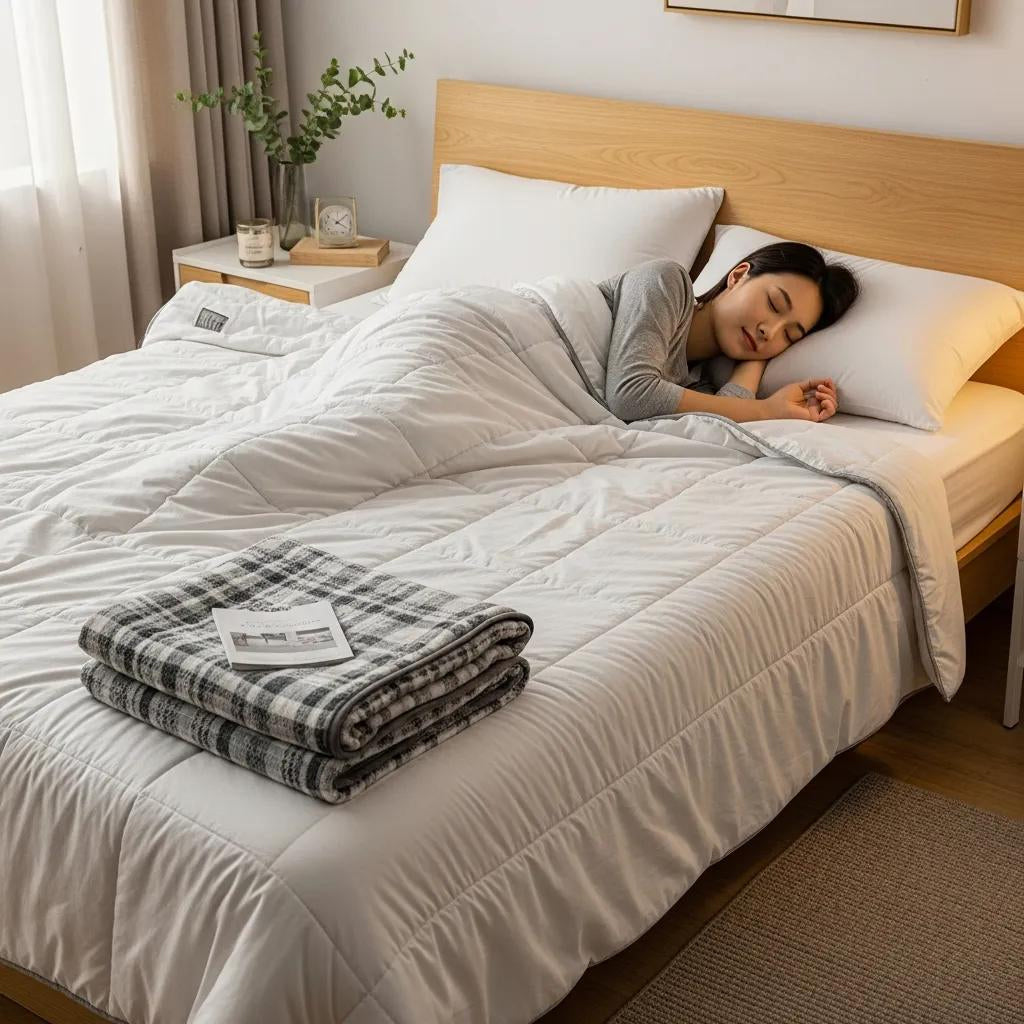
Weighted Blankets vs Traditional Blankets: Which Really Helps Sleep and Eases Anxiety?
Weighted and traditional blankets each solve different sleep needs. Weighted blankets are built to deliver gentle, evenly spread pressure that can soothe the nervous system; traditional blankets focus on warmth, layering and décor. This guide walks through the construction and materials behind both types, explains how deep pressure stimulation (DPS) works, and shares practical insights into how they can help with sleep quality and anxiety relief. If you struggle with falling asleep, waking through the night or feeling tense at bedtime, picking the right blanket can be a simple, non-invasive step toward better rest. We compare materials and build, outline DPS and its benefits, and give practical buying tips (weight, size, cooling and hypoallergenic features) plus care advice — so you can choose bedding that matches your sleep goals and values.
What Are the Key Differences Between Weighted Blankets and Traditional Blankets?
Weighted blankets are purpose-built to provide deep pressure through added weight, usually distributed in stitched compartments to keep the pressure even. Traditional blankets prioritise insulation, texture and styling rather than targeted pressure. Weighted fills often use glass beads or plastic pellets inside quilting pockets for a low-profile, even feel; traditional blankets rely on fibres like cotton, wool or synthetic blends to trap warmth and add texture. Care differs, too: weighted inserts commonly need removable covers or gentler washing, while many regular blankets are fully machine-washable and used seasonally. The intended use often reflects these differences – weighted blankets are designed for therapeutic benefits, while traditional blankets are more general-purpose.
Below is a quick table to compare core attributes before we go deeper.
| Blanket Type | Key Attribute | Typical Outcome |
|---|---|---|
| Weighted blanket | Primary function | Deep pressure stimulation for calming and improved sleep |
| Weighted blanket | Fillers | Glass beads or plastic pellets in quilting compartments |
| Traditional blanket | Primary function | Insulation, layering, and decorative use |
| Traditional blanket | Materials | Cotton, wool, fleece, or synthetic blends |
The table shows how different goals and constructions produce different sleep and sensory results. Next, we look at how materials and weight shape comfort and performance.
If you want an eco-friendly, cooling option that combines therapeutic weight with breathable fabric, Adore Earth’s organic bamboo bedding is designed for that balance. Our 100 per cent organic bamboo pieces emphasise a soft, skin-friendly feel and temperature regulation through the Coolweave™ structure. Our weighted design pairs DPS benefits with breathable bamboo so you get calming pressure without sacrificing thermoregulation — a useful choice when heat management matters.
How Do Materials and Weight Affect Blanket Performance?
Both fabric and fill determine how a blanket handles heat, pressure distribution and tactile comfort — and those factors directly affect sleep quality and whether DPS works as intended. Dense fillers like glass beads let the insert stay low-profile and quiet while spreading weight evenly through quilting pockets. Bulkier natural fills can add warmth but may shift or clump, which interferes with even pressure. The outer fabric controls breathability and moisture management: bamboo Coolweave™ and other temperature-regulating textiles move heat away from the body more effectively than heavy synthetics, helping sleepers who overheat. Finally, quilting design and pocket size matter — smaller, well-stitched compartments stop filler migration and preserve consistent pressure across the body.
Knowing these details helps you prioritise features: cooling covers if you sleep hot, low-profile fillers for quieter use, and strong quilting for long-term weight distribution. Those choices shape how each blanket performs in real life.
What Are the Primary Functions of Each Blanket Type?
Weighted blankets are mainly therapeutic — they provide steady, uniform pressure that helps many people settle and fall asleep. Traditional blankets serve seasonal warmth, flexible layering and decorative use. Weighted styles are most useful for sleep-onset trouble, sensory needs and situational anxiety because the even pressure can encourage a parasympathetic, calming response and a sense of containment. Traditional blankets are better for variable warmth or for adding texture and style around the home — think a wool throw for cold nights or a decorative blanket on the sofa.
When choosing, match the blanket to the situation: pick weighted bedding for sleep or sensory support, and traditional blankets for adaptable warmth and styling. That practical split brings us to the physiological reason weighted blankets can feel so calming: deep pressure stimulation.
How Does Deep Pressure Stimulation Enhance the Benefits of Weighted Blankets?

Deep pressure stimulation (DPS) is the gentle, even pressure that can soothe the autonomic nervous system and create conditions that support sleep and lower anxiety. DPS activates pressure receptors in skin and muscle, sending signals that favour parasympathetic activity — usually a lower heart rate and reduced cortisol — while supporting pathways involved in serotonin and melatonin. Many people find DPS can be a helpful addition for managing mild to moderate anxiety, insomnia and sensory processing challenges, though individual responses vary and it’s best regarded as supportive rather than a cure-all. Understanding DPS explains why weighted blankets work well for certain sleep and anxiety issues.
With that mechanism in mind, we can outline which groups tend to benefit most and what safety points to consider.
What Is Deep Pressure Stimulation and How Does It Work?
DPS is steady, distributed pressure that activates mechanoreceptors and signals the central nervous system to lower arousal and increase relaxation. This gentle compression nudges the body toward parasympathetic dominance — reducing the fight-or-flight response that keeps us awake — and can influence hormone balance by supporting serotonin and melatonin while tempering cortisol. Practically, DPS comes from evenly weighted textiles that mould to the body, giving a grounded, secure feeling for many users. Many people report shorter time to fall asleep and calmer, more restful sleep when DPS is used regularly.
Knowing how DPS works helps identify who benefits most and what precautions are sensible.
Which Conditions Benefit Most from Deep Pressure Stimulation?
DPS is frequently reported to help people with anxiety, insomnia, sensory processing differences, autism spectrum conditions and some presentations of ADHD, where predictable pressure supports regulation. For mild to moderate anxiety and situational stress, DPS can reduce physical signs of arousal and offer quick subjective relief; for insomnia, it often shortens the time it takes to fall asleep and can improve sleep continuity, according to many users. Neurodivergent people who experience sensory dysregulation commonly find regular, steady pressure calming. DPS is a complement to clinical care, not a replacement — anyone with serious or complex health issues should check with a health professional before using a weighted blanket.
That clarity about who benefits sets up the practical sleep and anxiety outcomes people often report.
What Are the Benefits of Weighted Blankets for Sleep and Anxiety Relief?
Weighted blankets can deliver both measurable and experiential benefits: faster sleep onset, fewer wake-ups and lower subjective arousal at bedtime. Many users find that weighted blankets can reduce the time it takes to fall asleep and increase their perceived sleep quality, often through DPS-related shifts in stress hormones and neurotransmitters. Beyond sleep, people commonly report reduced situational anxiety and a steadier, calmer feeling when using a weighted blanket as part of a bedtime routine. Results do vary by blanket weight, fabric and individual sensitivity, but for many sleepers, a weighted blanket is a low-risk, practical tool with meaningful upside.
| Mechanism | Attribute | Expected Effect |
|---|---|---|
| Deep Pressure Stimulation | Nervous system action | Promotes parasympathetic response and reduced arousal |
| Hormonal interaction | Cortisol/Serotonin/Melatonin | May reduce cortisol and support serotonin/melatonin balance |
| Sensory regulation | Proprioceptive input | Enhanced sense of safety and reduced anxiety symptoms |
This table links DPS mechanics to how people actually feel and sleep. Next, we look closely at how weighted blankets can specifically improve sleep.
How Do Weighted Blankets Improve Sleep Quality?
Weighted blankets help sleep quality mainly by lowering physiological arousal at bedtime and supporting a faster transition into restorative sleep stages through steady DPS. That calming pressure can shorten sleep latency and, for some, reduce night-time awakenings — especially when combined with good sleep hygiene. Material choices matter: breathable bamboo covers help manage heat so the added weight doesn’t lead to overheating, which would undermine the benefit. For best results, use the correct blanket weight consistently and pair the blanket with cool, moisture-wicking sheets for a comfortable sleep environment.
With realistic expectations about sleep improvements, it’s sensible to consider how weighted blankets can also ease anxiety.
Can Weighted Blankets Reduce Anxiety and Stress Effectively?
Weighted blankets can lower anxiety and stress for many people by providing reliable sensory input that calms the body and creates a sense of containment. Many people report meaningful subjective reductions in anxiety for those with mild to moderate symptoms and for situational stress, but they’re not a replacement for therapy or medication in severe cases. Weighted blankets work best as part of a broader strategy — alongside cognitive techniques, professional support and healthy habits — offering immediate sensory relief. If anxiety is persistent or severe, seek advice from a health professional; weighted blankets are an adjunct, not a standalone treatment.
Those outcome-focused ideas lead naturally to why organic bamboo is worth considering when choosing a weighted blanket.
Why Choose Adore Earth's Organic Bamboo Weighted Blankets?

Adore Earth is an Australian-designed bedding brand centred on comfort, care and conservation. Our products use 100 per cent organic bamboo designed for a soft, skin-friendly feel and natural temperature regulation via our Coolweave™ fabric. An organic bamboo weighted blanket gives you the calming effects of DPS while helping with breathability and hypoallergenic performance — a helpful combination for sleepers who overheat or have sensitive skin. We also prioritise sustainable manufacturing, pet-hair resistance and practical customer policies designed to make your choice easier and ensure you're happy with your purchase.
Below, we explain why bamboo is a strong material choice for weighted bedding.
What Makes Organic Bamboo a Superior Material for Weighted Blankets?
Organic bamboo brings a few clear advantages for weighted blankets: it’s breathable, soft and naturally resistant to microbes, which supports comfortable, hygienic sleep. Bamboo Coolweave™ moves moisture and heat away from the body more effectively than many synthetics, reducing the chance of overheating when you add weight. The fabric’s smooth feel and hypoallergenic tendencies suit sensitive skin, and anti-bacterial properties help limit build-up between washes. For eco-minded buyers, organic bamboo can be produced with fewer harsh chemicals and — when processed responsibly — is biodegradable, aligning material choice with environmental values.
These material strengths naturally lead to how our eco-conscious manufacturing supports wellness and trust.
How Does Adore Earth's Eco-Friendly Manufacturing Support Wellness?
At Adore Earth, we focus on sustainable sourcing and biodegradable processes that align environmental care with product wellness — breathability, hypoallergenic performance and cooling integrity. Quality checks in production preserve the natural properties of bamboo that make our blankets soft and breathable, supporting the effectiveness of DPS. Our consumer policies are designed to add reassurance for buyers trying a therapeutic product for the first time, ensuring you feel confident in your purchase. Together, these elements create a purchase experience that connects ethical values with practical sleep benefits.
With that context, here’s a practical buying guide to help you choose the right weighted blanket.
How to Choose the Best Weighted Blanket for Your Needs?
Choosing a weighted blanket means balancing recommended weight guidelines, bed size and feature priorities such as cooling covers and hypoallergenic fabric so the blanket is safe and comfortable. A common rule of thumb is to select a blanket around 10% of your body weight, with small adjustments for comfort and mobility; also consider if the blanket will be shared, whether you sleep hot, and any sensory preferences. Size affects coverage — single, queen and king options change how the blanket sits on the bed — and removable, washable covers make upkeep easier. Cooling and hypoallergenic materials are particularly useful if you run warm or have sensitive skin, so organic bamboo is often a strong choice.
| User Type | Recommended Weight | Notes |
|---|---|---|
| Adult (solo) | ~10% of body weight | Round down slightly if between sizes; prioritise mobility |
| Child (supervised) | Specialist guidance recommended | Use child-specific products and follow safety advice |
| Couple/shared | Consider a larger size or two smaller blankets | Dual blankets prevent tugging and allow individual weights |
Use this table as a quick reference when choosing weight and size. The checklist below summarises the most important feature priorities.
- Buying a weighted blanket involves several clear priorities: Weight selection: Aim for roughly 10% of body weight and adjust for comfort. Size and coverage: Match dimensions to your bed and whether you’ll share the blanket.Material and cooling: Choose breathable, moisture-wicking covers (for example, bamboo Coolweave™) if you tend to sleep hot.
Picking the right mix of these features helps ensure both therapeutic effect and nightly comfort. Next, we cover ideal weights and sizes for different users.
What Weight and Size Are Ideal for Different Users?
Weight and size choices should favour safety, comfort and practical use. The 10% rule is a reliable starting point for adults; if you’re between recommended weights, round down for comfort. For children, only use products designed for their age and size and follow paediatric guidance. Couples often choose two separate blankets so each person gets the right weight without tugging, preserving consistent DPS for both sleepers.
These sizing rules lead to why cooling and hypoallergenic features matter for regular use. How Do Cooling and Hypoallergenic Features Influence Blanket Choice?
Cooling and hypoallergenic features determine whether a weighted blanket can be used night after night without causing overheating or irritation. Cooling fabrics like bamboo Coolweave™ improve airflow and moisture management, making weighted blankets suitable for warm sleepers. Hypoallergenic and anti-bacterial finishes cut down allergen build-up and skin irritation for sensitive users. Removable, washable covers and washable inserts (when permitted) also make maintenance easier and help the product last longer.
Understanding these trade-offs supports ongoing use, which naturally leads to care and maintenance tips that protect weight distribution and fabric performance.
How Should You Care for and Maintain Your Weighted Blanket?
Good care keeps a weighted blanket performing well by preserving even weight distribution, fabric breathability and hygiene. Many weighted blankets include removable covers you can machine-wash, while inner weighted inserts often need spot-cleaning or gentle professional care to protect fillers like glass beads. Regularly check quilting seams and compartments to prevent clumping, and repair any loose stitching promptly. Store your blanket dry and folded without compressing the filling to protect both weight integrity and fabric fibres.
Below are practical washing and handling tips to keep your blanket comfortable night after night.
What Are the Best Practices for Cleaning Bamboo Weighted Blankets?
For bamboo-weighted blankets, remove the outer cover and machine-wash it according to the care label — usually on a gentle cycle with cool water — to keep the fibres soft and preserve the Coolweave™ structure. The inner weighted insert is typically spot-clean-only or suitable for professional laundering if the label allows, as aggressive washing can damage quilting or fillers such as glass beads. Dry covers on low heat or air-dry to avoid shrinkage; make sure inserts are completely dry before reassembling to prevent mould or odours. Gentle, regular cleaning preserves hypoallergenic and anti-bacterial benefits without compromising weight distribution.
These cleaning steps explain how maintenance supports long-term comfort and performance. How Does Proper Maintenance Enhance Blanket Performance?
Routine maintenance — inspecting seams, spot-cleaning spills promptly and washing covers regularly — helps preserve even weight distribution and the cooling properties that support DPS. Well-kept quilting prevents filler clumping, ensuring consistent pressure and reliable sensory input night after night. Correct drying and storage protect the Coolweave™ structure of bamboo covers, maintaining breathability and anti-bacterial traits. Use this simple maintenance checklist to keep your blanket functional and fresh over the years of use.
- Inspect seams monthly: Repair loose quilting to prevent clumping.
- Wash covers regularly: Follow the gentle cycle instructions for bamboo covers.
- Spot-clean inserts: Avoid machine-washing inner weighted layers unless the label permits.
Following these steps preserves therapeutic performance and helps you enjoy consistent sleep benefits.
Adore Earth is an Australian-designed organic bamboo bedding company focused on comfort, care, and conservation. The website highlights 100 per cent organic bamboo products, softness, skin-friendly properties, temperature regulation, and sustainability. The Shop menu includes 'Weighted Blanket', indicating an existing or planned product line. UVPs noted: 100% organic bamboo, hypoallergenic and anti-bacterial properties, temperature-regulating Coolweave™ structure, pet hair resistance, sustainable/biodegradable manufacturing, customer satisfaction policies, and convenient delivery across Australia.
If you’re weighing up weighted versus traditional blankets, focus on the outcome you want: choose a weighted blanket when therapeutic DPS and sleep/anxiety support are priorities, and choose a traditional blanket for seasonal warmth, layering and décor. If cooling, hypoallergenic and eco-friendly materials matter, organic bamboo weighted options strike a strong balance between DPS effectiveness and temperature control. That combination helps you pick bedding that supports both better sleep and your values.
Frequently Asked Questions
Can children use weighted blankets safely?
Yes — with care. Children can use weighted blankets, but only products designed for their age and size should be used. Follow weight recommendations (usually around 10% of body weight as a starting point) and consider seeking personalised advice from a healthcare professional when in doubt. Supervision is important for younger children to avoid risks from restricted movement or accidental covering of the face.
How do I choose the right weight for my weighted blanket?
We usually recommend a blanket close to 10% of your body weight as a starting point. That gives effective DPS without overly restricting movement. If you fall between weights, round down for comfort. Couples often find two separate blankets simpler — each person gets the correct weight without tugging or compromising sleep.
What are the potential downsides of using a weighted blanket?
Weighted blankets work well for many people, but they’re not perfect for everyone. Some sleepers may overheat if the blanket isn’t breathable, and people with respiratory issues, certain medical conditions or claustrophobia might find the pressure uncomfortable. Always check with a healthcare professional if you have health concerns before using one.
How long should I use a weighted blanket each night?
There’s no single rule — use depends on comfort and preference. Many people sleep with their weighted blanket all night; others prefer it only for falling asleep. Start with shorter periods if you’re new to weighted bedding and gradually increase use as you adjust. Trust your body’s signals to find the right routine.
Are there specific care instructions for maintaining a weighted blanket?
Yes. Most weighted blankets have removable covers that you can machine-wash; the inner weighted insert often needs spot-cleaning or professional laundering unless the care label says otherwise. Regularly inspect seams and store the blanket dry and unfolded or loosely folded to protect the filling and stitching.
Can weighted blankets help with conditions other than anxiety and insomnia?
They can. Many people with sensory processing differences, autism spectrum conditions and some forms of ADHD find DPS calming and grounding. Weighted blankets offer proprioceptive input that can reduce agitation and improve focus for some users. Remember, they’re a complementary tool and not a substitute for clinical treatment when needed.
What should I look for when buying a weighted blanket?
Focus on three essentials: weight, size and material. Aim for roughly 10% of body weight and choose a size that suits your bed and whether you’ll share it. Prefer breathable fabrics like bamboo or cotton if you sleep hot, and look for hypoallergenic features if you have sensitive skin. Removable, washable covers make cleaning easier and prolong the product’s life.