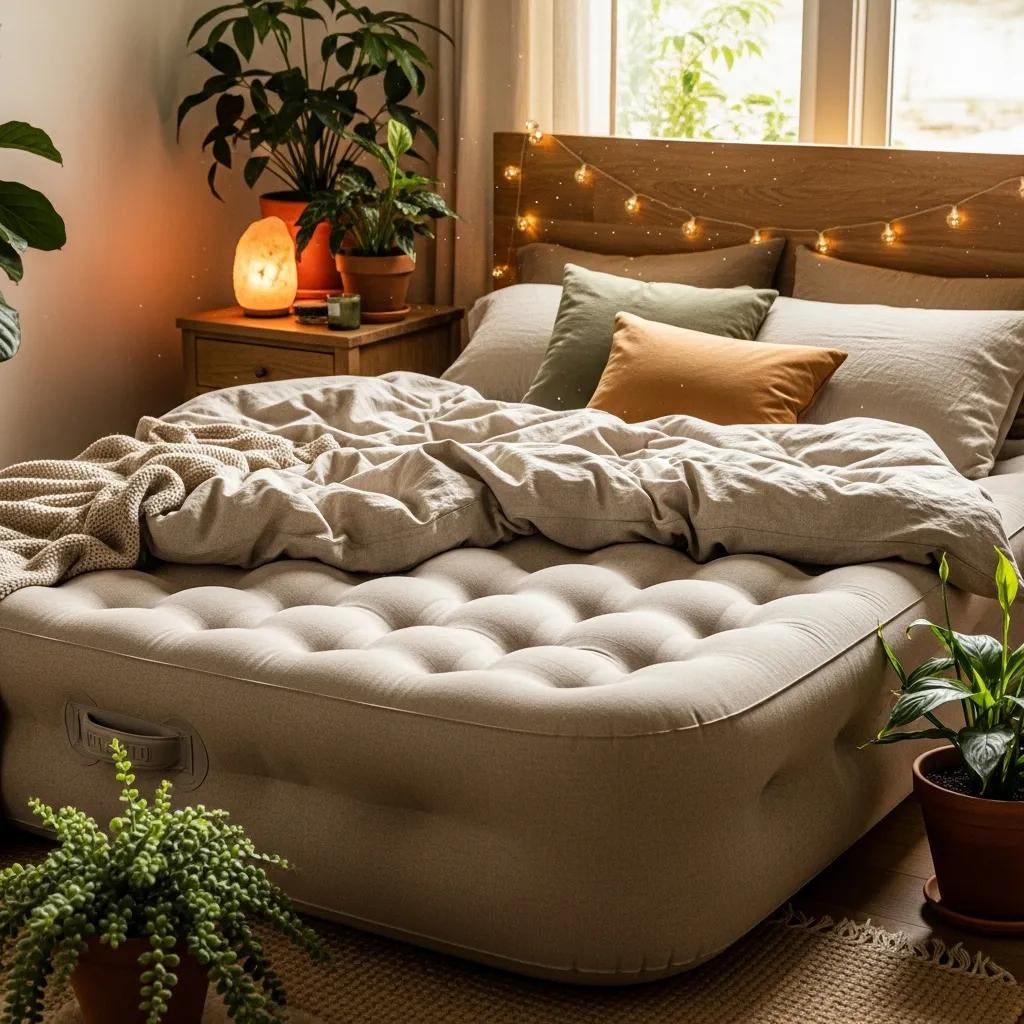
Sustainable Air Mattresses vs Traditional Beds: Which One Really Lasts? An Eco-Friendly Durability Guide
Sustainable air mattresses are inflatable sleep systems made from lower-impact materials like TPU or recycled polymers. Traditional mattresses include innerspring, foam and natural-latex constructions built from cores and comfort layers. Longevity comes down to three things: the materials used, how the mattress is made, and how it’s treated day to day. Looking at parts such as air chambers, seams and covers explains why one option can outlast another. This guide walks through how durable sustainable airbeds are compared with traditional mattresses, the environmental trade-offs to consider, and simple steps you can take to choose and care for a longer‑lasting, eco-friendly sleep setup. Read on for the key lifespan drivers, local use considerations, material impacts (PVC vs TPU), and how bamboo toppers and protectors can help your mattress last longer. By the end, you’ll have a practical checklist and maintenance tips to keep your mattress performing for years.
What Factors Determine Mattress Lifespan and Durability?
Three connected factors shape how long any mattress lasts: the materials themselves, build quality, and everyday use. Materials like TPU, PVC, foam or latex have different strengths — tensile strength, puncture resistance and recovery from compression — that affect how they stand up over time. Build details such as seam strength, valve design, chamber layout and internal supports dictate where wear appears first. Finally, how you use, store and clean a mattress changes the rate of wear: daily sleeping, heavy loading, damp storage or poor hygiene all speed deterioration. Understanding these elements points to the practical care steps that preserve a mattress and shows how protective layers can meaningfully extend life.
Here are five high‑impact durability factors and what they mean in practice.
- Materials and construction: Stronger materials and reinforced seams reduce punctures and seam failures.
- Usage frequency and loading: Daily use and heavier loads cause fatigue and sagging faster than occasional use.
- Inflation and pressure management: Correct inflation keeps seams and chambers from being overstressed.
- Environmental conditions: Humidity, temperature swings and pests accelerate material breakdown and microbial issues.
- Surface protection and cleaning: Toppers and mattress protectors cut abrasion, spills and sun/UV exposure that shorten useful life.
How Do Materials Influence Mattress Longevity?
Material choice sets the main durability limits: tensile strength, puncture resistance and resistance to compression or creep. TPU and reinforced laminates resist punctures and keep their elasticity longer than thin PVC films. Natural latex offers strong resilience and recovery compared with lower‑density foams, which tend to compress on repeated use. Memory foam and polyurethane commonly show a compression set over time — you’ll notice this as sagging and loss of support — while coil systems can suffer uneven settling if their support foams fail. A tightly woven bamboo cover or topper also helps by reducing surface abrasion and keeping moisture out of the core, slowing the degradation process.
With material mechanics understood, the next section looks at how day‑to‑day use — especially inflation and storage — affects wear.
What Usage Patterns Affect Mattress Durability?
How often a mattress is used and for what purpose (guest bed, camping, or every night) largely determines realistic lifespan expectations. Airbeds are particularly sensitive to inflation: underinflation causes internal bending and friction, while overinflation stresses seams and valves — both routes to premature failure. How you store and transport an air mattress matters too; folding or compressing it badly can create stress points and micro‑tears that turn into leaks. Regular cleaning, avoiding sharp objects, and using a protective topper or mattress protector reduce wear from spills, body oils and pets — all of which help both air and traditional mattresses last longer.
Those everyday behaviours directly inform the lifespan comparisons between sustainable airbeds and traditional mattresses.
How Long Do Sustainable Air Mattresses Last Compared to Traditional Mattresses?

Well-made, sustainable air mattresses made from high‑grade TPU or recycled composites can last several years with proper care. Cheap PVC airbeds are usually short‑lived. Traditional mattresses typically offer a longer service life if they’re maintained. Typical lifespan ranges are: temporary air mattress (1–3 years), high‑quality permanent airbed (3–8+ years), innerspring or foam mattress (6–10 years depending on materials and care), and natural latex (8–12+ years thanks to its resilience). Good seams, thoughtful valve design and protective layers like bamboo toppers help close the gap by limiting surface wear and moisture damage.
| Mattress Type | Durability Driver | Typical Lifespan & Use |
|---|---|---|
| Temporary air mattress (thin PVC) | Low tensile film, single chamber seams | 1–3 years; overnight or occasional guest use |
| Permanent airbed (reinforced TPU, multi-chamber) | High-strength TPU, reinforced seams and pump integration | 3–8+ years; everyday or long-term sleep replacement |
| Innerspring mattress | Coil fatigue and support-layer integrity | 6–10 years; household main bed use |
| Foam mattress (polyurethane/memory) | Foam density and compression set | 7–10 years; varies with foam quality |
| Natural latex mattress | Material resilience and ventilation | 8–12+ years; durable, sustainable core |
| Hybrid (coil + foam/latex) | Combined strengths; dependent on foam quality | 7–12 years; complex to recycle but durable |
| Bamboo-toppered mattress | Protection + pressure distribution | Adds years by reducing surface wear and moisture damage |
What Is the Typical Lifespan of Eco-Friendly Air Mattresses in Australia?
In Australian conditions — with variable humidity and seasonal changes — TPU or recycled‑TPU air mattresses generally outperform cheap PVC options. For occasional guest use, a well‑made, sustainable air mattress commonly lasts 2–4 years before signs of seam or valve wear appear. Premium permanent airbeds designed for nightly use often reach 4–8 years with routine care. It's worth remembering that real-world storage issues like damp garages or coastal humidity can impact lifespan, so proactive care — correct inflation, breathable storage and a topper — helps you reach the higher end of those ranges.
A simple, effective step in Australia is to use a breathable bamboo topper or mattress protector. It improves comfort and cuts surface wear that leads to premature replacement.
How Do Temporary and Permanent Airbeds Differ in Durability?
Temporary air mattresses prioritise portability and price: thin PVC films and basic valves keep weight and cost down but reduce lifespan. Permanent airbeds use multi‑chamber designs, thicker TPU laminates and reinforced seams; integrated pumps and zoned support spread load and lower stress on individual seams. Practical advice is clear: choose temporary models for travel or occasional guests, and invest in a higher‑spec permanent TPU airbed if it will be used every night — the better build can easily extend usable life by 3–5× under the same care. For both types, correct inflation routines and surface protection are essential to avoid early seam failure and keep comfort consistent.
Understanding those design and use differences naturally leads to the environmental considerations for airbed materials.
What Are the Environmental Impacts of Air Mattress Materials?
Materials vary widely in sustainability. PVC is cheap and serviceable in the short term, but creates problems at end‑of‑life, while TPU and recycled TPU offer better recyclability and generally lower toxicity risks during use. Production footprints depend on the polymer and processing technique — PVC manufacturing often involves halogenated chemicals and additives, whereas TPU and its recycling pathways tend to present fewer long‑term hazards. Microplastic shedding and VOC off‑gassing are material‑specific concerns; choosing low‑VOC formulations and recyclable TPU helps reduce indoor air risks and lifecycle impacts. Proper disposal and preferring PVC‑free options where practical lowers the long‑term environmental cost, even if upfront prices are higher.
The environmental burden of mattresses also includes disposal costs that many buyers don’t immediately see.
| Material | Sustainability Indicator | Key Environmental & Health Considerations |
|---|---|---|
| PVC (polyvinyl chloride) | Low biodegradability, high additive use | Potential for VOCs, problematic disposal and additives |
| TPU (thermoplastic polyurethane) | Better recyclability, higher durability | Lower VOC risk, longer life reduces lifecycle impact |
| Recycled TPU | Improved material circularity | Depends on the recycling infrastructure and purity |
| Natural rubber (rare in airbeds) | Biobased and biodegradable | Sourcing and durability trade-offs apply |
| Nylon reinforcements | Durable, improves lifespan | Synthetic fibre shedding risk at disposal |
How Do PVC and TPU Compare in Sustainability and Longevity?
PVC and TPU highlight a clear trade‑off: PVC is inexpensive and common in temporary airbeds but tends to get brittle and is harder to recycle, while TPU costs more but resists punctures and degrades more slowly. For many buyers, investing in a TPU‑based sustainable air mattress pays off through longer service life and lower off‑gassing, which reduces replacement frequency and improves indoor air quality. Recycled TPU options and recycling programmes further strengthen the case for TPU — provided local facilities accept the material. Cost‑conscious shoppers should weigh the upfront price against expected lifespan and end‑of‑life impacts.
What Are the Concerns Regarding Microplastics and VOCs?
Microplastic fragments can be released during wear or when synthetic parts enter waste streams, adding to long‑term pollution. VOCs come from plasticisers, adhesives and some laminates, producing off‑gassing that can affect indoor air quality soon after purchase. To reduce exposure, choose low‑VOC certified materials, air new mattresses before use, and prefer biodegradable or recyclable components where available. Practical steps like using natural‑fibre covers and washing toppers help limit micro‑fragment shedding and reduce direct contact.
How Do Traditional Mattress Materials Affect Durability and Sustainability?
Traditional mattresses vary widely: innerspring models rely on coils and comfort foams, foam mattresses depend on polymer density and formulation, and natural latex offers strong resilience but needs responsible sourcing. Durability drivers differ — coils can outlast foams if support layers stay intact, while memory foam can collapse faster at lower densities due to compression set. Sustainability hinges on feedstocks: petroleum‑derived foams carry larger carbon and disposal burdens, whereas natural latex and organic fibres can be lower‑impact when certified and ethically produced. Combining a durable core with a breathable, sustainable surface such as bamboo often gives the best balance of longevity and environmental performance.
| Core Material | Lifespan Range | Durability Driver | End-of-Life Option |
|---|---|---|---|
| Innerspring | 6–10 years | Coil fatigue, foam support failure | Recycling varies; component separation is needed |
| Memory foam/polyurethane | 6–10 years | Foam density and compression set | Limited recyclability; landfill is common |
| Natural latex | 8–12+ years | Material resilience and cell structure | Biodegradable with proper processing |
| Hybrid (coil + foam/latex) | 7–12 years | Combined strengths; dependent on foam quality | Complex to recycle but durable |
| Bamboo-topped systems | Core dependent | Surface protection reduces abrasion | Toppers are often biodegradable or recyclable |
What Is the Lifespan of Innerspring, Foam, and Natural Latex Mattresses?
Innerspring mattresses commonly last 6–10 years, with coil fatigue and failing support foams leading to sagging and comfort loss. Memory foam and polyurethane mattresses also average around 6–10 years, but longevity depends strongly on foam density — lower‑density foams lose resilience sooner. Natural latex stands out for its recovery and durability, often reaching 8–12+ years and resisting sagging. These ranges are useful anchors, but careful maintenance — rotation, protectors and good ventilation — makes it more likely a mattress reaches the upper end of its expected life.
Which Sustainable Materials Offer Longer Mattress Life?
Natural latex, tightly woven bamboo and hemp covers, and high‑quality wool or cotton blends tend to improve durability by resisting abrasion, promoting breathability and reducing moisture buildup. For cores, natural latex generally outperforms many petrochemical foams because of its cellular resilience and slower compression set. Hybrid constructions that combine durable coils with resilient latex often give the best overall lifespan. Look for certifications like organic or OEKO‑TEX to reduce exposure to harmful additives and VOCs. Pairing a strong core with a bamboo topper and protector offers a system‑level boost to usable life and sustainability.
Why Is Bamboo a Durable and Eco-Friendly Alternative in Bedding?
Bamboo grows fast and usually needs less water and fewer pesticides than conventional fibres, making it a strong sustainability candidate for bedding — sheets, toppers and protectors. Processed bamboo fibres can be woven tightly (for example, branded weaves like Coolweave™) to resist abrasion, keep soft through many washes, and provide breathable protection that limits moisture transfer to a mattress. As a protective layer, bamboo toppers redistribute pressure, reduce surface friction and wick moisture away from the core, slowing the wear mechanisms that cause earlier replacement. Combined with biodegradability in many processing contexts, bamboo is a practical way to extend mattress life while reducing environmental impact.
Knowing a little fibre science helps you choose and care for bamboo products, so they last.
What Makes Organic Bamboo Bedding Long-Lasting and Sustainable?
Organic bamboo bedding gets its durability from strong fibres and a consistent weave; tighter weaves like Coolweave™ keep the feel soft and reduce pilling across many wash cycles. Low‑impact bamboo cultivation cuts pesticide and water use compared with conventional cotton, and when responsibly processed, it lowers the product’s overall footprint. Care matters: gentle wash cycles, low‑heat drying and avoiding harsh detergents preserve fibre integrity and extend life. Choosing organic or responsibly processed bamboo reduces exposure to residual chemicals and supports longer‑lasting bedding that also protects your mattress.
How Do Bamboo Mattress Toppers Enhance Mattress Longevity?

A bamboo mattress topper adds a breathable, abrasion‑resistant layer that cuts direct wear on ticking and comfort foams while distributing pressure to avoid localised sagging. Its moisture‑wicking nature keeps microclimates cooler and drier, which slows foam breakdown and microbial growth. Using a topper together with a compatible protector guards against spills, stains and body‑oil transfer — common reasons people replace mattresses early. Rotate and wash your topper as recommended; combined with correct mattress care, these simple habits delay replacement significantly.
If you’re looking for specific products, Adore Earth offers organic bamboo mattress toppers and protectors designed to extend mattress life while staying true to sustainability values. Our range includes 100% organic bamboo sheets, quilt cover sets, quilts, mattress toppers and protectors that prioritise natural materials, comfort and conservation. We offer flexible trial options and convenient delivery, so it’s easy to try a topper or protector that could reduce replacements and improve sleep. Choosing a bamboo topper and protector from a sustainability‑focused supplier is a practical, cost‑effective way to lengthen the usable life of airbeds and conventional mattresses.
How Can Consumers Choose Sustainable and Long-Lasting Sleep Solutions?
Picking a durable sleep solution starts with a simple decision flow: think about intended use, material priorities, how much maintenance you’ll do, and how long you expect the mattress to last. These choices point to whether an airbed, foam, innerspring or latex system fits your home. Prioritise construction details — reinforced seams, multi‑chamber designs for airbeds, foam density and latex purity — choose PVC‑free options when possible, and add breathable bamboo toppers and waterproof but breathable protectors. Regular maintenance — rotation, correct inflation, airing new products and cleaning — slows degradation and delays replacement. Finally, consider end‑of-life options and certifications so you don’t face unexpected disposal burdens later.
- Identify the primary use: daily sleep, guest bed, travel or camping, then set realistic lifespan expectations.
- Prioritise materials: choose TPU or natural latex for longevity and avoid thin PVC for long‑term use.
- Add protective layers: choose breathable bamboo toppers and protectors to cut surface wear.
- Plan maintenance: schedule rotation, correct inflation, airing of new products and regular cleaning.
- Check end‑of‑life options and certifications to reduce environmental impact when it’s time to replace.
What Are the Benefits of PVC-Free and Biodegradable Mattress Options?
Choosing PVC‑free and biodegradable components reduces several environmental and health downsides: fewer VOC emissions, less long‑term ecological persistence and simpler end‑of‑life processing where facilities exist. PVC‑free airbeds and toppers lower indoor air‑quality risk from off‑gassing and avoid chlorine‑based additives that complicate recycling. Biodegradable surfaces like organic bamboo or natural latex break down more readily than many synthetics when processed properly, reducing landfill burden. Look for clear material disclosure and low‑VOC claims so your choices match both durability and environmental goals.
How Does Adore Earth Support Eco-Conscious Bedding Choices?
Adore Earth specialises in Australian‑designed organic bamboo bedding that focuses on sustainability, natural materials and everyday comfort. Our collection includes 100% organic bamboo sheets, quilt cover sets, quilts, mattress toppers and protectors, all framed by our core values: Comfort, Care and Conservation. We design products to extend mattress life by offering breathable, protective layers that reduce wear and moisture transfer. To make trial easy, we offer flexible trial options and convenient delivery, so you can test a topper or protector with no long‑term commitment. Choosing from a sustainability‑minded supplier is a simple step toward fewer replacements and a lower environmental footprint.
Frequently Asked Questions
What maintenance practices can extend the life of my air mattress?
Regular care makes a big difference. Keep your air mattress properly inflated — not overfilled, not underfilled — to avoid seam and chamber stress. Use a mattress protector or a breathable topper to shield against spills, oils and abrasion. Clean the surface as recommended, rotate the mattress occasionally to even out wear, and store it in a cool, dry place folded according to the manufacturer’s instructions to avoid stress points. These simple practices help preserve comfort and durability.
Are there specific brands known for sustainable air mattresses?
Yes — look for brands that disclose materials, avoid PVC, use TPU or recycled polymers, and support end‑of‑life options. Adore Earth, for example, focuses on eco‑friendly materials and transparent sourcing for its bedding accessories. When choosing a brand, check for certifications, clear material descriptions and evidence of recycling or takeback programmes to ensure a genuinely sustainable choice.
How do I properly dispose of an old air mattress?
First, check whether the mattress can be recycled — some facilities accept TPU or can separate recyclable parts. If recycling isn’t available, consider donating if it’s still usable. If disposal is the only option, use a licensed waste facility or mattress collection service rather than leaving it in public spaces. Local regulations vary, so consult your council or waste authority for the correct procedure in your area.
What are the signs that my air mattress needs to be replaced?
Replace an air mattress when you see frequent leaks, unrepaired punctures, persistent air loss despite correct inflation, major seam or valve failures, or significant sagging that affects comfort and support. If the mattress no longer holds shape or repeatedly loses pressure, it’s time to look for a replacement.
Can I use a traditional mattress protector on an air mattress?
Yes — provided the protector is breathable and not overly bulky. Choose a protector that wicks moisture and allows airflow to avoid trapping heat and moisture, which can damage the mattress over time. Make sure it fits securely without adding excessive padding that interferes with the airbed’s intended pressure and comfort settings.
What are the benefits of using bamboo bedding with my air mattress?
Bamboo bedding is breathable and excellent at wicking moisture, which improves comfort and helps keep the mattress surface drier. Bamboo fibres are resistant to abrasion, so they reduce surface wear, and many bamboo textiles are biodegradable or more readily recyclable than synthetic alternatives. Using bamboo sheets and toppers can extend your air mattress’s life while improving sleep comfort.
How do I choose the right air mattress for my needs?
Decide how you’ll use the mattress: occasional guests or nightly sleep? For travel and infrequent use, a temporary PVC option may suffice. For everyday sleep, choose a permanent airbed with reinforced seams, a multi‑chamber design and a quality TPU shell. Check for a strong valve design, pump integration if you want convenience, and plan to pair the bed with a breathable topper or protector. Read reviews, compare materials, and prioritise clear material disclosure and product support.