



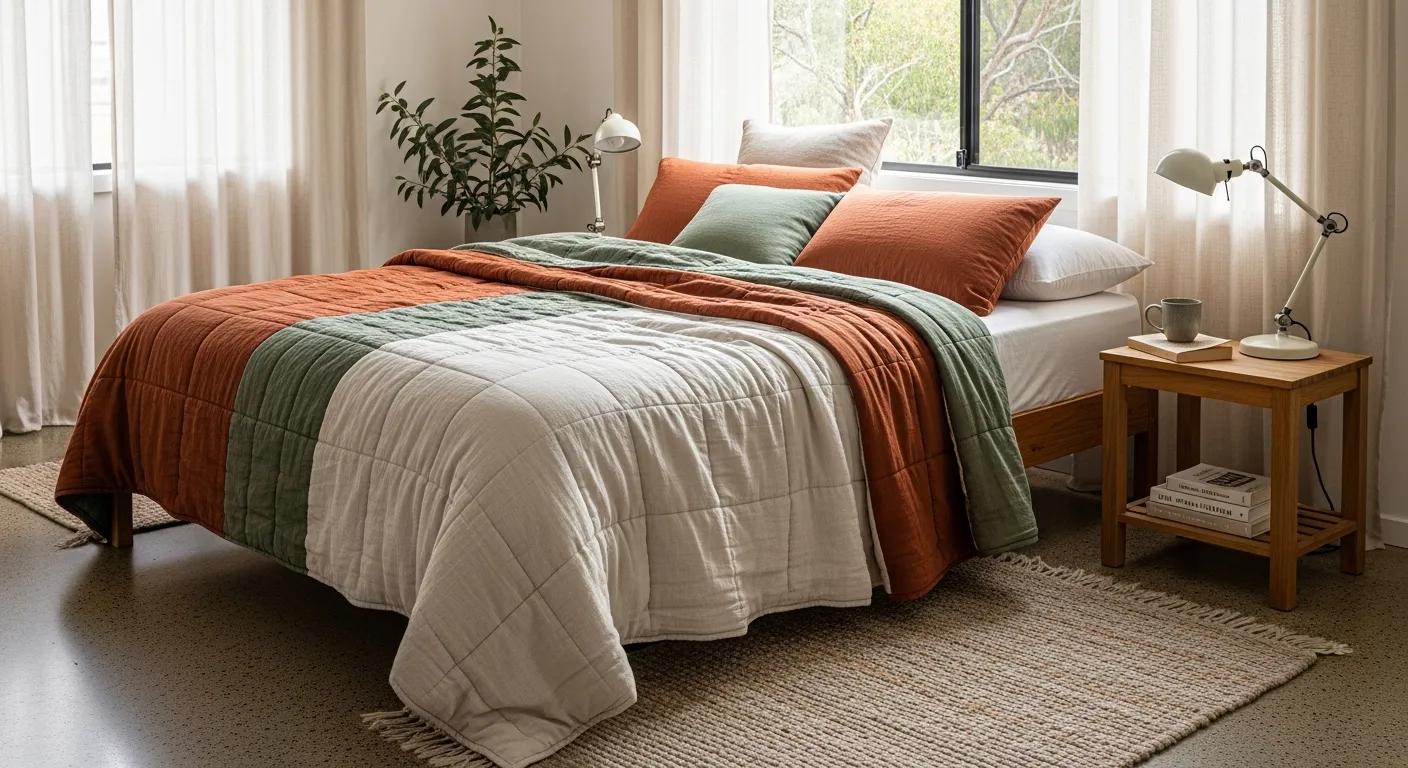
Well-made cotton quilts are built to last — they stand up to everyday wear while staying comfortable night after night. This guide walks you through what makes a cotton quilt durable in Australian homes: from fibre choice and quilting technique to GSM and stitch quality. We cut through confusing labels like thread count and GSM, and give clear, practical care tips so your quilt keeps looking and feeling great for years. You’ll learn how cotton’s fibre structure affects strength, why cotton suits different Australian climates, the comfort and hypoallergenic perks, and the steps that help you get the most life from your quilt. We also compare cotton with bamboo bedding and explain why choosing durable, certified materials matters for both your budget and the environment.
What Makes Cotton Quilts Durable and Long-Lasting in Australia?
A durable cotton quilt is the result of quality fibres, careful construction and thoughtful finishing. Long-staple cotton, tighter weaves, the right GSM and solid stitching all reduce pilling, seam failure and loss of loft. Those details matter in Australia, where frequent washing and seasonal climate changes put extra strain on bedding. Below is a compact checklist of the technical features to prioritise when you’re evaluating long-lasting cotton quilts from Australian retailers.
- Choose long-staple cotton — it produces stronger yarns with less pilling.
- Opt for a higher GSM fill if you want a durable loft and stable structure.
- Check stitching density and edge binding — good finishing prevents seam failure.
- Look for even quilting patterns that spread fill consistently and reduce stress points.
These checkpoints link tiny fibre-level details to real-world durability you can see and feel.
How Does Cotton Fibre Structure Contribute to Quilt Durability?

The make-up of cotton fibres determines strength, flexibility and resistance to abrasion — and those microscopic traits scale up to affect your quilt’s lifespan. Long-staple cotton fibres form stronger yarns with fewer loose ends, so fabrics pill less and resist breakage after repeated washes. The yarn twist and spinning method also affect tensile strength: well-spun yarns are less likely to shed fibres during use. Knowing about staple length, twist and yarn construction explains why some quilts keep their loft and finish through many wash cycles while others wear out faster.
Those fibre-level mechanics naturally raise questions about real-world performance here in Australia, where breathability and wash resilience matter a lot.
Why Are Durable Cotton Quilts Suitable for Australian Climates?
Cotton breathes and manages moisture well, making it versatile across Australia’s climate zones — from humid coastal summers to cool inland winters. Cotton’s natural structure helps with evaporative cooling when it’s humid, while the right fill weight and GSM give insulation for colder months. Because many households wash bedding often, cotton’s tolerance for gentle laundering and its ability to keep its feel and structure help it last longer in practice. Thinking about local climate and washing habits will help you pick the fill weight and quilting style that suits your home.
Next, we’ll cover the comfort and health benefits that many buyers look for alongside durability.
What Are the Health and Comfort Benefits of Cotton Quilts?
Cotton quilts offer clear comfort and health advantages: natural breathability, moisture absorption and a gentle hand-feel that many sleepers prefer. The fibre’s moisture-wicking and air-permeable structure reduces trapped humidity next to skin, improving thermal comfort and helping discourage dust-mite growth — a real plus for hot sleepers and those after breathable cotton quilt Australia options. Softness comes from fibre quality and finishing, and long-staple yarns help that softness last. Below are the main comfort and health benefits to weigh when choosing a durable cotton quilt.
- Breathability and moisture control for better sleep comfort in humid conditions.
- Natural fibres are generally gentler on sensitive skin than some synthetics.
- Regular washing keeps cotton quilts hygienic and reduces allergen build-up.
These benefits tie into allergy concerns and temperature management, which we address next.
Are Hypoallergenic Cotton Quilts Ideal for Sensitive Skin?
Hypoallergenic cotton quilts are often a good pick for sensitive skin. Cotton tends to hold fewer synthetic residues and stands up to frequent washing, which helps keep allergens down. The simple mechanism: cotton absorbs moisture and works well with gentle, fragrance-free detergents for a more thorough clean. Look for reputable certifications and transparent supply chains to back up hypoallergenic claims and avoid greenwashing. Regular care — washing when recommended and drying properly — keeps those hypoallergenic benefits in place.
Keeping hypoallergenic properties intact also connects to how cotton manages temperature and comfort year-round.
How Do Cotton Quilts Regulate Temperature for Year-Round Comfort?
Cotton helps regulate temperature by absorbing moisture and allowing air to move through the weave — that gives evaporative cooling in summer and makes layering effective in winter. Fill choice and GSM control insulation: lighter fills and lower GSM work well for warm weather, while higher GSM holds more warmth. Quilting pattern and stitch density change how fill distributes and how air pockets form, influencing thermal behaviour. Simple tips — use a lighter quilt in summer and layer in winter — let you use cotton’s natural properties for comfortable sleep all year.
Your choice of temperature-regulation will also change how you care for the quilt — an important factor in extending its life.
How Does Choosing Organic Cotton Quilts Support Sustainability?

Organic cotton quilts help reduce pesticide use and promote farming that supports soil health — which lowers environmental impact across the textile’s lifecycle. Organic farming avoids synthetic agrochemicals, which reduces toxic run-off, supports biodiversity and can improve long-term soil resilience. When durable construction is added to the mix, those environmental benefits are amplified because you replace items less often. Certifications like GOTS offer an audit trail that covers organic fibre, processing and social standards, helping you spot genuinely better products. Here are the core environmental benefits of choosing organic cotton quilts.
- Less pesticide and synthetic chemical use on farms.
- Potential improvements to soil health and local biodiversity.
- Better transparency when paired with recognised certifications.
These sustainability points lead naturally into how brands position products and commitments for eco-conscious buyers.
Adore Earth is an Australian-designed brand focused on sustainable, stylish homewares. While our core range highlights organic bamboo bedding, we also offer thoughtfully made cotton and cotton-blend quilts. We centre durability, comfort and clear sustainability claims, supported by our customer-focused approach and convenient Australia-wide delivery, so you can feel confident choosing a quality, long-lasting quilt.
Choosing certified materials and solid construction together reduces replacement frequency — a key multiplier for better environmental outcomes.
What Are the Environmental Advantages of Organic Cotton in Quilts?
Organic cotton reduces reliance on synthetic pesticides and fertilisers, which lowers chemical residues in soil and waterways and helps local biodiversity. Avoiding synthetic inputs supports healthier ecosystems and can help maintain farm productivity over time. Organic cotton is biodegradable at the end of its life, which is an advantage over many synthetic alternatives. When durability is considered, a long-lasting organic quilt spreads its environmental impact over more years, reducing per-year impact and making it a sound choice for eco-aware shoppers.
These points naturally lead to questions about how to verify organic claims — which we cover next.
How Do Certifications Like GOTS Ensure Organic Cotton Quality?
GOTS (Global Organic Textile Standard) verifies that organic cotton meets strict criteria across fibre sourcing, processing and social responsibility. It works through third-party audits that check cultivation practices, chemical use and finishing processes, and it also includes social-labour standards — so it reduces the chance of misleading claims. If you prioritise organic cotton quilt benefits, looking for recognised certifications like GOTS is a quick, practical way to confirm quality and accountability. Certification pairs well with physical durability markers — like stitch quality and GSM — to give you a clearer picture of a product’s real value.
Knowing about certification helps you protect your investment by following proper care, which directly extends a quilt’s lifespan.
How Can You Maximise the Lifespan of Your Durable Cotton Quilt?
Extending a quilt’s life comes down to washing, drying, storing and repairing it correctly. Gentle cycles, mild detergents, avoiding bleach and limiting high-heat drying preserve fibre strength and finish. Store quilts away from damp and pests, and repair small issues before they get worse. Below is a short care checklist plus a maintenance table that links common actions to expected lifespan impacts.
Essential care checklist to extend quilt lifespan:
- Wash on a gentle or delicate cycle with a mild, enzyme-free detergent.
- Dry on low heat or flat air-dry completely to avoid shrinkage and fibre damage.
- Store in a breathable cotton bag in a cool, dry place to prevent mould.
- Mend loose seams and patch worn spots promptly to stop further damage.
Follow these simple steps to keep your quilt looking and performing its best, and to reduce the need for replacement.
Intro to maintenance table: The table below links common care actions to outcomes and expected lifespan benefits so you can prioritise the right routines.
| Component | Care Action | Expected Impact on Lifespan |
|---|---|---|
| Washing method | Gentle machine wash or hand wash at ≤30°C | Protects fibres and limits pilling |
| Drying approach | Low-heat tumble or flat air-dry; avoid over-drying | Prevents shrinkage and brittle fibres |
| Storage practice | Breathable container in a dry environment | Reduces mould risk and fibre breakdown |
| Repair & stitching | Prompt patching and seam reinforcement | Extends usable life and delays replacement |
This practical summary shows how everyday care choices translate into real durability gains and help maintain comfort and appearance.
What Are Essential Care and Maintenance Tips for Cotton Quilts?
Start with a washing schedule and the right detergent to remove oils and allergens without stripping fibres. Use a gentle, enzyme-free detergent and skip fabric softeners — they can coat fibres and reduce breathability. Wash at lower temperatures with balanced loads to keep agitation low. Dry on a low heat setting or air-dry to keep loft intact, and air quilts in the shade to refresh them without sun damage. Inspect seams and hems regularly and repair loose threads quickly to avoid bigger faults. These habits lengthen a quilt’s life and keep it feeling fresh.
Good care also makes it easier to spot high-quality quilts when you’re shopping.
How to Identify High-Quality Durable Cotton Quilts in Australia?
Use a simple buying checklist to spot durability markers: look for long-staple cotton, clear GSM or fill-weight information, dense quilting stitch counts and reinforced binding. When you can inspect a product, check for even stitch lines, no puckering and solid edge finishing. Technical specs like GSM and visible quilting patterns give useful signals about likely longevity — and always ask retailers for fill composition and care recommendations. Comparing these indicators helps you choose a cotton quilt that’s built to last in Australian homes.
With these buying points in mind, it’s helpful to compare cotton to other natural fibres like bamboo.
How Do Cotton Quilts Compare to Other Natural Fibres Like Bamboo?
Cotton and bamboo each have strengths and trade-offs across durability, breathability, environmental footprint and care. Cotton — especially long-staple with good construction — tends to offer reliable wash-resilience and structural durability. Bamboo-derived fibres are often softer and wick moisture well, but tensile strength can vary depending on how the fibre is processed. The comparison table below sums up key durability and sustainability attributes to help you weigh long-lasting cotton quilts against bamboo alternatives.
Intro to comparison table: This side-by-side highlights durability and sustainability attributes to support a practical choice.
| Material | Attribute | Value |
|---|---|---|
| Cotton | Durability | Durable when long-staple and well-constructed; good wash resilience |
| Bamboo | Breathability & Softness | Excellent moisture-wicking and soft hand-feel; tensile strength varies by processing |
| Cotton | Water & Chemical Footprint | Depends on farming method; organic cotton lowers chemical inputs |
| Bamboo | Production Considerations | Fast-growing and low-irrigation, but processing methods affect the environmental profile. |
The table clarifies trade-offs and shows how blends can combine cotton’s structure with bamboo’s softness when done with the right GSM and quilting.
Adore Earth’s expertise centres on organic bamboo bedding, but we also offer cotton and cotton-blend quilts for shoppers who prioritise durability and traditional care traits. Our product descriptions explain the trade-offs so you can pick the right material for your needs.
Knowing these differences helps you prioritise what matters most — durability, sustainability, or feel — before you invest.
What Are the Durability Differences Between Cotton and Bamboo Quilts?
Cotton’s durability comes from long-staple fibre options and robust yarn constructions that tolerate repeated washing. Bamboo can be extremely soft and breathable; its durability depends on processing — mechanically processed bamboo tends to be stronger, while chemically transformed bamboo viscose can be softer but less strong. Cotton–bamboo blends aim to balance cotton’s structure with bamboo’s moisture management, provided they’re made with suitable GSM and quilting. These material differences set expectations for care and lifespan in everyday Australian use.
Material durability variations lead naturally into lifecycle and sustainability comparisons.
How Does the Sustainability of Cotton Quilts Compare to Bamboo Bedding?
Comparing sustainability means looking at farming inputs, processing methods and product longevity. Organic cotton cuts pesticide use, while bamboo often needs less irrigation but may require chemical processing that changes its footprint. Durability is a key factor: a longer-lived product spreads its embodied impacts over more years, so a durable organic cotton quilt can compete well on a per-year footprint. Look for certifications and transparent supply chains to verify claims and avoid greenwashing. Including care-related emissions from laundering gives a fuller picture when comparing cotton and bamboo.
These lifecycle considerations bring us to whether a durable cotton quilt is a smart choice for eco-conscious Australians.
Why Is Investing in Durable Cotton Quilts a Smart Choice for Eco-Conscious Australians?
Buying a durable cotton quilt balances environmental, financial and comfort goals: you replace items less often, lower your per-year environmental impact and keep comfort consistent. The economics are simple: investing in quality upfront usually means better long-term value than repeatedly replacing cheaper items. Environmentally, durability reduces textile waste and annualised emissions. Durable cotton quilts fit the sustainable-luxury trend, where verified materials and longevity matter more than disposable buying. Here are practical ROI and sustainability reasons why durable cotton quilts make sense.
- Durable construction cuts replacement frequency and landfill waste.
- Longer service life results in better value over time and preserves embodied resources.
- High-quality pieces hold comfort and appearance longer, increasing reuse value.
Those points lead naturally to simple calculations around replacement frequency and lifecycle savings explored below.
At Adore Earth, we tie durability and sustainability into product design — offering long-lasting homeware and clear guidance so you can choose bedding that performs and endures. If you’re ready to shop, our product pages outline materials, care and certification so you can buy with confidence.
How Does Durability Reduce Waste and Promote Sustainable Living?
Durability reduces waste by cutting how often you replace items — a quilt that lasts ten years instead of three means far fewer units sent to landfill. The mechanism is straightforward: the embodied energy and materials of one durable item are spread over more years, lowering the annual footprint. Simple value examples — considering the initial investment and environmental impacts over expected service years — highlight the benefits. Durable goods also encourage repair, reuse and donation, further reducing textile waste.
This logic supports choosing quality over disposable options for better financial and environmental outcomes.
What Makes Durable Cotton Quilts a Long-Term Investment?
A durable cotton quilt becomes an investment through better long-term value, lasting comfort and potential for hand-down value — and these benefits grow when you follow proper care. Value calculations show how investing in quality upfront for superior materials and construction can provide greater value and reduce environmental impact over many seasons. Emotional and aesthetic durability — how the quilt keeps looking and feeling right — also reduces impulse replacement. Combine durability with certification and good care, and the product delivers both value and sustainability.
Frequently Asked Questions
What is the difference between organic cotton and conventional cotton quilts?
Organic cotton quilts are made from cotton grown without synthetic pesticides or chemical fertilisers, which helps protect soil, waterways and surrounding ecosystems. Conventional cotton often uses more agrochemicals, which can leave residues and harm the environment. Organic lines usually come with certification (like GOTS) that covers both farming and processing, so they’re a better option if you care about environmental and social standards.
How often should I wash my cotton quilt to maintain its quality?
Wash frequency depends on use, but a good rule is every 1–3 months. If you have allergies, pets or sweat heavily, wash more often. Use a gentle cycle, mild enzyme-free detergent and avoid bleach. Dry thoroughly on low heat or air-dry to keep fibres and loft in good shape.
Can I use fabric softeners on my cotton quilt?
We recommend skipping fabric softeners — they can leave residues that reduce breathability and moisture-wicking. If you want extra fluff, use dryer balls to help maintain loft without coating the fibres.
What are the signs that my cotton quilt needs to be replaced?
Look for significant loss of loft, obvious wear like frayed edges or heavy pilling, persistent odours that don’t go away with washing, or increased allergy symptoms. Those are good indicators, it’s time to replace the quilt.
How do I store my cotton quilt when not in use?
Store clean, completely dry quilts in a breathable cotton bag or a well-ventilated storage box. Keep them in a cool, dry place away from direct sunlight and avoid plastic bags that trap moisture. Check stored quilts periodically for pests and moisture.
Are there specific brands known for high-quality, durable cotton quilts?
Yes — look for brands that use long-staple cotton, publish GSM and care instructions, and support their claims with certifications like GOTS. Brands that prioritise sustainability, transparent supply chains and clear customer support — including Adore Earth — are reliable places to start.