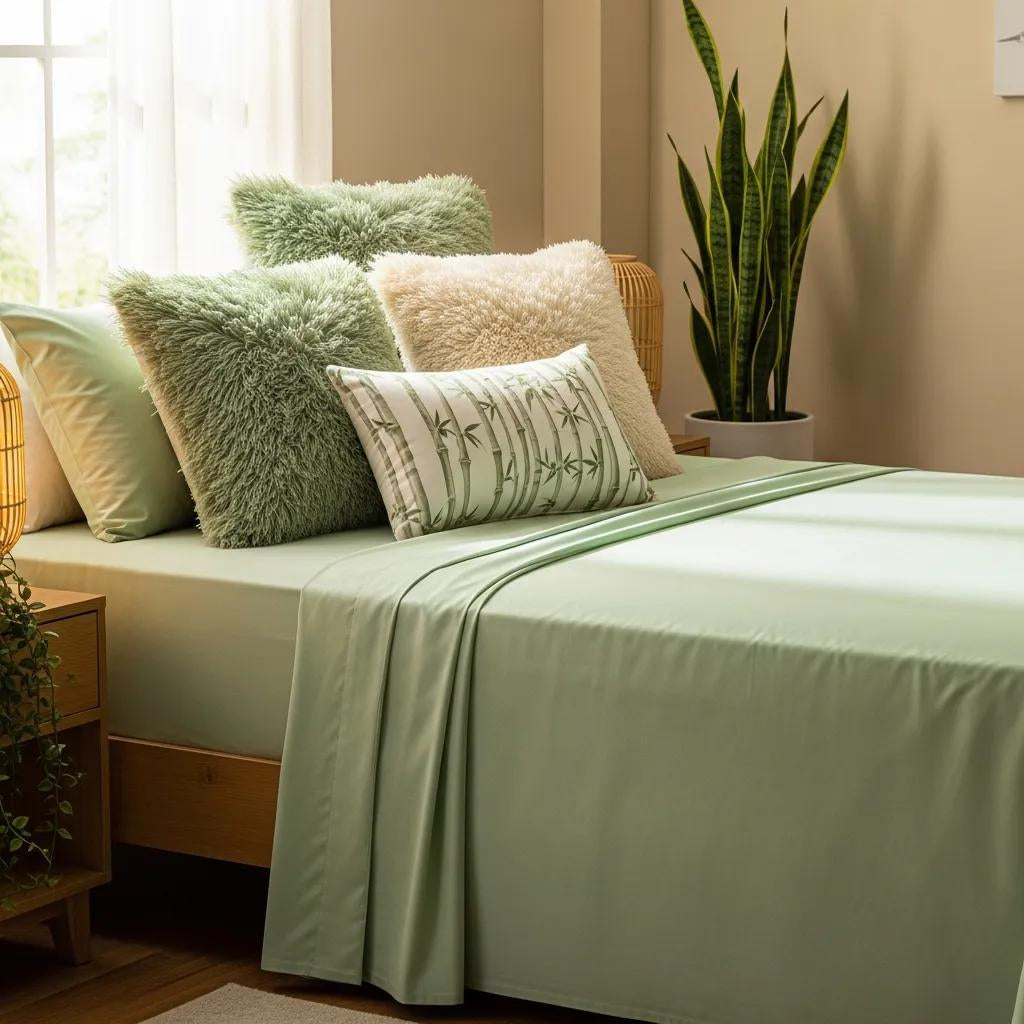
Unexpected Benefits of Bamboo Sheets: Gentle, Hypoallergenic Comfort and Smarter Temperature Control
Bamboo sheets are bed linens made from fibres sourced from bamboo plants. They pair a natural, silky feel with practical health advantages: people often find bamboo’s natural hypoallergenic qualities and its knack for temperature regulation — both useful for better sleep and healthier skin. If you wake up irritated, overheated or sensitive to dust and allergens, bamboo’s moisture-wicking, smooth surface and inherent antimicrobial traits can help. This guide breaks down how bamboo fibres work in the sleep environment, explaining how these features can ease conditions like eczema and acne. You’ll also get straightforward tips for choosing and caring for sheets, a sustainability summary, and comparisons with cotton, linen and synthetics so you can pick bedding that supports both comfort and health.
Why Are Bamboo Sheets Ideal for Sensitive Skin and Allergy Relief?
Bamboo sheets are well-suited to sensitive skin because their fibre structure doesn’t trap allergens the way heavier fabrics can. Breathability and strong moisture management reduce the warm, damp microclimates where irritants and microbes thrive. A smooth, low‑friction surface also cuts down on abrasion and prolonged contact with sweat — two common triggers for irritation. Many sleepers notice less odour and a fresher feel between washes, a result of both moisture control and reduced microbial buildup. Knowing how these features work helps explain why hypoallergenic bamboo is a smart choice for people who want gentler bedding — and why weave selection and proper care extend those benefits.
- Reduced allergen retention: Bamboo fibres don’t hold dust and particles as readily as heavier, rougher fabrics.
- Moisture management: Fast wicking moves sweat away from skin, lowering dampness that can inflame sensitive areas.
- Lower‑friction surface: A silky finish reduces abrasion on delicate or irritated skin.
These properties combine to create a sleep surface that reduces common triggers for itching and congestion. To keep those advantages working, follow recommended laundering and use mattress protection to limit allergen build‑up and preserve the fabric’s natural performance.
How Do Hypoallergenic Bamboo Sheets Reduce Allergic Reactions?
Bamboo sheets cut allergic reactions by lowering direct contact with allergens and by keeping the sleep surface drier — conditions that discourage dust mites and microbial growth. The fibres are fine and smooth, so fewer particles stick during sleep and washing. At the same time, strong wicking pulls moisture away from skin and speeds evaporation. Washing regularly at recommended temperatures and using allergen‑proof mattress covers further reduces exposure to persistent triggers. Altogether, these steps help reduce common histamine responses such as sneezing, nasal congestion and skin flare‑ups, giving allergy‑prone sleepers fewer disturbances at night.
Think of it as a simple care system: choose the right fibre, manage moisture, and keep up with maintenance — each step lowers allergen burden and informs smarter bedding choices.
What Makes Bamboo Sheets Dust Mite Resistant and Antibacterial?

Bamboo sheets tend to discourage dust mites and limit bacterial growth because they stay cooler and drier than denser textiles and present a surface less friendly to microbes. Dust mites prefer warm, humid environments rich in skin flakes; bamboo’s fast wicking and breathability interrupt that lifecycle by lowering humidity where skin meets fabric.
You might also notice less odour and fewer microbes on bamboo textiles, thanks to both physical moisture control and natural plant compounds carried through some processing methods.
To maximise these properties, rotate bedding regularly, wash according to manufacturer guidelines, and keep mattresses well ventilated. A drier sleep environment and breathable mattress systems complement bamboo’s strengths to suppress dust‑mite populations and reduce microbial load.
How Do Bamboo Sheets Regulate Temperature for a Cooler, Comfortable Sleep?
Bamboo sheets regulate temperature through breathable fibre geometry and efficient moisture transfer. The fibres form channels that move sweat away from the skin to the fabric surface, where airflow promotes evaporation and disperses heat. This evaporative cooling prevents clamminess and helps sleepers feel cooler, reducing wakeups from night sweats. Weave and weight matter: lightweight, percale‑style weaves with medium thread counts maximise airflow, while heavier sateen weaves feel silkier but may trap more warmth.
Different fabrics deliver different cooling effects in everyday use. The table below summarises typical breathability and relative cooling tendencies to help hot sleepers compare options.
Fabric breathability and moisture handling influence how cool a sheet feels overnight.
| Fabric | Breathability | Typical Cooling Effect |
|---|---|---|
| Bamboo viscose/lyocell | High | Often 1–3°C cooler than heavy cotton during active perspiration |
| Cotton (standard) | Moderate | Breathable but holds more moisture than bamboo |
| Synthetic blends | Low to moderate | May trap heat and retain moisture, increasing clamminess |
This comparison highlights bamboo’s tendency to support a cooler sleep microclimate, though personal comfort depends on weave, sheet weight and bedroom conditions. For warmer months, choose lighter weaves and pair sheets with breathable duvets to get the most cooling benefit.
What Is the Role of Moisture-Wicking in Temperature Control?
Moisture‑wicking moves sweat away from skin across the fabric surface so it can evaporate faster, creating cooling through latent heat loss. That process is especially helpful for people who experience night sweats, hot flashes or menopause‑related temperature shifts because it shortens the time skin stays damp. Wicking also reduces prolonged moisture contact that increases friction and irritation on sensitive skin. Pair bamboo sheets with ventilated bedding and breathable sleepwear to create a steady evaporative cycle that lowers overheating episodes and supports uninterrupted sleep.
Combined with good room airflow and sensible sleepwear choices, moisture‑wicking can noticeably improve sleep quality and skin comfort.
How Does Bamboo Fabric Maintain Breathability and Prevent Overheating?
Bamboo fabric stays breathable thanks to its long, porous fibres and the way those fibres are spun into viscose or lyocell. The resulting fabric lets air circulate and moisture escape. Weave choice — percale versus sateen — affects this: percale has an open, crisp structure for maximum airflow; sateen is smoother and denser, feeling silkier but holding more heat. Thread count is less important than fibre origin and weave; overly high thread counts can reduce breathability on any fabric, so moderate counts on bamboo balance softness and ventilation best. Hot sleepers should opt for lightweight, percale‑style bamboo with a mid‑range thread count to avoid overheating.
Practical tips: choose lighter weights for summer, skip heavy toppers that trap heat, and keep bedroom ventilation steady — these choices preserve bamboo’s natural breathability.
What Are the Unique Antibacterial Properties of Bamboo Bedding?
Bamboo bedding shows antibacterial tendencies driven by both moisture control and naturally occurring plant compounds sometimes called “bamboo kun.” Together, these factors can reduce bacterial colonisation and odour formation, leaving a fresher sleep surface and fewer potential skin irritants. Our bamboo sheets can help inhibit certain bacteria better than untreated fibres, especially when paired with regular washing. It’s important to be realistic: these antibacterial tendencies lower microbial load — they don’t replace routine hygiene or proper laundering.
Here's a quick look at how our bamboo sheets help keep your bedding fresh and hygienic.
The biological and practical elements of bamboo’s antimicrobial activity can be summarised as follows.
| Element | Attribute | Effect |
|---|---|---|
| Bamboo kun (plant compound) | Natural bioactive agent | May inhibit bacterial growth and reduce odour formation |
| Moisture-wicking | Fabric property | Lowers surface moisture, limiting microbial proliferation |
| Fabric surface texture | Physical characteristic | Reduces particle adherence and helps prevent residues that feed microbes |
This table shows antibacterial performance is the result of several interacting factors — plant compounds, fabric construction and moisture control — which together help maintain a cleaner sleep surface when paired with appropriate care.
Our bamboo sheets are designed with these health and hygiene strengths in mind, offering hypoallergenic, antibacterial and moisture‑managing features to support sensitive skin and a cleaner sleeping environment.
How Does Bamboo Kun Provide Natural Antimicrobial Benefits?
Bamboo kun is a natural compound in bamboo plants believed to limit microbial growth and adhesion. In our sheets, these compounds, along with how the fibres are processed, can help keep bacterial counts lower, particularly when moisture control prevents colonies from expanding. For bedding, that can mean less odour and a lower microbial load between washes — benefits that matter for sensitive skin or those concerned about nightly odour. Still, these material properties are most effective when combined with regular laundering and good bedroom ventilation.
Knowing what bamboo kun contributes helps set reasonable expectations: it supports hygiene as part of a broader care routine, not as a replacement for cleaning.
Why Is Antibacterial Bedding Important for Skin Health and Hygiene?
Antibacterial bedding can support skin health by reducing microbes that interact with pores, wounds or inflamed skin, lowering the risk of secondary infection or irritation. For acne‑prone skin, fewer bacteria on pillowcases can reduce nightly re‑exposure to pore‑clogging organisms; for eczema sufferers, a cleaner, drier surface helps prevent triggers. Antibacterial bedding works best alongside dermatologist‑recommended skincare and a consistent washing schedule. Combined, good hygiene and the fabric’s properties create a stronger environment for clearer skin and more comfortable nights.
These points lead naturally to condition‑specific strategies for sleep hygiene and fabric selection when managing skin issues.
How Do Bamboo Sheets Support Skin Conditions Like Eczema and Acne?
Bamboo sheets support eczema and acne mainly by reducing friction, managing moisture and contributing to a cleaner sleep surface through lower microbial load. A well‑made bamboo sheet’s silky hand reduces mechanical irritation from tossing and turning, while wicking keeps skin drier — a key factor in preventing eczema flares. Antibacterial tendencies help lower nightly microbial exposure for acne‑prone faces, potentially reducing recontamination during sleep. When used alongside appropriate skincare and sleep hygiene, bamboo bedding can reduce triggers and support medical care plans.
For practical use, follow straightforward care steps and choose products that match medical advice and personal comfort needs.
Bamboo bedding can help manage skin conditions in several concrete ways:
- Reduce friction against the skin: Silky fibres lower abrasion that can worsen sensitive or broken skin.
- Manage moisture: Wicking pulls sweat away to prevent damp irritation and bacterial growth.
- Support hygiene: Lower microbial propensity helps reduce nightly exposure to potential irritants.
In What Ways Do Bamboo Sheets Soothe Sensitive and Irritated Skin?
Bamboo sheets soothe sensitive skin through a soft, low‑friction surface, quick moisture transfer away from the epidermis, and reduced contact with irritant particles. Less friction means fewer micro‑abrasions during sleep, helping preserve the skin barrier — a key goal in eczema care. By moving sweat away from skin, bamboo minimises the wet conditions that worsen inflammation and bacterial overgrowth. Together, these effects reduce nighttime triggers and complement topical treatments and moisturising routines recommended by dermatologists.
These benefits are strongest when paired with correctly sized sheets, gentle detergents and regular washing to avoid residue build‑up that could undermine the fabric’s soothing properties.
Can Bamboo Bedding Help Reduce Flare-Ups and Skin Irritation?
Bamboo bedding can help reduce flare‑ups and skin irritation by lowering environmental triggers — moisture, friction and microbial exposure — that often precipitate episodes. While results can vary, many people tell us they notice improvements after switching to our breathable, wicking bedding and following compatible care routines. It’s important to be realistic: bamboo sheets support treatment but aren’t a medical cure. Combining the right fabrics with dermatologist‑directed topical care, humidity control and routine laundering gives the best chance of fewer and milder flares.
This integrated approach shows how intentional bedding choices can support long‑term skin health strategies.
Why Are Bamboo Sheets a Sustainable and Eco-Friendly Bedding Choice?

Bamboo sheets are often labelled sustainable because bamboo regenerates quickly and generally needs less water and fewer agrochemicals than many conventional crops. Fast growth and high biomass make it a renewable fibre source, and bamboo fibres are biodegradable at the end of life, reducing persistent waste compared with many synthetics. When processing uses closed‑loop methods, the environmental footprint improves further. These lifecycle advantages appeal to eco‑minded shoppers who want bedding that matches their values without sacrificing performance.
We highlight sustainability across our range by offering organic bamboo sheets and calling out the eco‑friendly features that help conscious buyers balance health and environmental priorities.
How Does Bamboo Cultivation Impact Environmental Health?
Bamboo cultivation can benefit environmental health through rapid regrowth and efficient land use: many bamboo species mature far faster than trees, allowing quicker, renewable yields. Bamboo typically requires less water and fewer pesticides than water‑intensive crops like conventional cotton, which reduces pressure on freshwater resources and lowers chemical runoff. Properly managed stands also stabilise soil and support habitat, and responsible fibre processing (for example, closed‑loop systems) further trims environmental impact. We prioritise low-input farming and transparent processing to ensure the best outcomes.
Understanding cultivation and processing helps you select suppliers that maximise bamboo’s environmental advantages.
What Makes Our Bamboo Sheets a Chemical-Free, Organic Option?
We offer 100% organic bamboo sheets, providing a chemical‑free, organic bedding option for those who prioritise natural materials. This reflects our focus on responsible fibre sourcing and on product features such as hypoallergenic, antibacterial and moisture‑managing performance that tie back to the health benefits we’ve described.
That alignment gives shoppers a clear choice when they want bedding that balances health‑forward performance with eco‑conscious values.
How Do Bamboo Sheets Compare to Other Bedding Materials for Health Benefits?
Bamboo sheets compare well to cotton, linen and synthetic bedding across health‑related attributes like hypoallergenic potential, antibacterial tendency, moisture‑wicking, breathability and sustainability. Bamboo often outperforms conventional cotton in moisture management and shows stronger antimicrobial tendencies than untreated fibres, while matching linen’s breathability in many weaves. Synthetic blends usually lag in natural moisture handling. Differences come down to fibre chemistry, weave and finishing, so choose based on what matters most to you — cooling, allergy relief or environmental impact. The table below gives a side‑by‑side look at key trade‑offs to aid decision‑making.
When choosing bedding, prioritise the attributes that affect your sleep most — cooling, skin sensitivity or sustainability — and select materials and weaves accordingly.
| Material | Hypoallergenic | Antibacterial | Moisture-wicking | Breathability | Sustainability |
|---|---|---|---|---|---|
| Bamboo | High | Moderate to high | High | High | High (fast renewability) |
| Cotton | Moderate | Low to moderate | Moderate | Moderate | Moderate (varies by farming) |
| Linen | Moderate to high | Low to moderate | Moderate to high | High | High (durable, natural) |
| Synthetic | Low to moderate | Low | Low to moderate | Low to moderate | Low (petrochemical‑derived) |
This snapshot positions bamboo as a strong all-around choice for health‑minded sleepers, especially where moisture control and hypoallergenic performance matter most. Remember to weigh, weave and process when finalising a purchase.
What Are the Differences Between Bamboo and Cotton for Sensitive Skin?
Bamboo generally offers a smoother feel and superior moisture‑wicking compared with conventional cotton, which helps reduce friction and dampness that can irritate sensitive skin. Some cotton in mainstream supply chains receives chemical finishes that may bother very reactive users; organic bamboo aims to minimise those inputs. Both fibres breathe well, but bamboo’s moisture control often gives it an edge for people who sweat at night. Care is similar for both: use gentle detergents and wash regularly, and choose organic or minimally processed options to reduce chemical exposure.
These differences make bamboo a strong first choice for many sensitive‑skin situations, though personal preference should guide the final decision.
Why Choose Bamboo Over Linen or Synthetic Bedding for Allergies?
Choose bamboo over linen or synthetics when your main concerns are moisture‑driven irritation and bacterial exposure. Bamboo offers effective wicking, a soft, low‑friction surface, and a lower tendency to trap allergens. Linen is extremely breathable and durable, but it can feel rougher at first, which might bother very sensitive skin. Synthetics often trap heat and moisture, creating microclimates that favour allergens and odour. That said, linen is excellent in hot, dry climates, and synthetics may suit specific performance needs — overall, bamboo is usually preferable for allergy reduction and skin comfort.
For shoppers prioritising hypoallergenic, moisture‑managing bedding, bamboo is a sensible frontline option; match weave and care instructions to your sleep environment and sensitivity level. Our organic bamboo sheets are a great example of these attributes for health‑focused buyers.
Frequently Asked Questions
Are bamboo sheets suitable for all skin types?
Bamboo sheets are especially helpful for sensitive skin thanks to their soft, low‑friction surface and hypoallergenic tendencies. They also work well for normal and oily skin types — the moisture‑wicking helps keep skin drier, which can reduce breakouts. Individual reactions vary, so consider your personal comfort and any dermatologist advice when choosing bedding.
How should I care for bamboo sheets to maintain their properties?
Wash bamboo sheets in cold or lukewarm water with a gentle detergent. Avoid bleach and fabric softeners, which can harm fibres. Tumble dry on low or line dry to minimise shrinkage. Regular washing keeps sheets fresh and free of allergens, and careful laundering preserves their hypoallergenic and moisture‑managing performance.
Can bamboo sheets help with night sweats?
Yes. Bamboo sheets are a good option for night sweats because their wicking moves sweat away from the skin so it can evaporate, producing a cooling effect. For warmer nights, choose lighter weaves to maximise airflow and cooling.
What is the environmental impact of bamboo sheet production?
Bamboo can be a more sustainable fibre because it grows quickly and often needs less water and fewer chemicals than some conventional crops. Bamboo is biodegradable and, when processed responsibly (for example, with closed‑loop systems), its environmental footprint improves further. Still, look for brands that prioritise responsible sourcing and transparent manufacturing to ensure minimal impact.
How do bamboo sheets compare to synthetic bedding in terms of health benefits?
Bamboo sheets typically outperform many synthetic options on breathability, moisture management and hypoallergenic potential — all factors that reduce skin irritation and allergic reactions. Synthetics can trap heat and moisture, creating conditions that encourage allergens and bacteria. For those with sensitivities, bamboo’s natural properties often make it the healthier choice.
Are there any downsides to using bamboo sheets?
There are a few trade‑offs. Bamboo sheets can cost more than basic cotton, and lower‑quality versions may wear faster if not cared for. They also benefit from specific washing practices to maintain performance. Choosing reputable, well‑made bamboo products helps avoid these issues.
Can bamboo sheets help with skin conditions like eczema or acne?
Bamboo sheets can support people with eczema or acne by reducing friction, managing moisture and lowering microbial exposure. These effects can reduce nightly triggers, but they work best alongside appropriate skincare and medical guidance for optimal results.