



Organic Bamboo Bedding — Sustainable comfort that feels like home
Your bed is one of the easiest places to reduce household waste and improve sleep. Organic bamboo bedding is a practical, high-impact choice: soft, breathable and built to last. This guide walks you through how bamboo and ethical textiles perform, the sleep and health benefits they deliver, and how to choose, style and care for pieces that stay beautiful for years. We address common bedroom problems — overheating, sensitive skin and frequent replacements — and show how the right materials can fix them while cutting long-term waste. Along the way, you'll find clear comparisons with other natural fibres, product advice on sheets and duvet covers, care tips to extend life, and sourcing cues to choose responsible brands. We also include real examples from our Australian collection so you can see how everyday choices add up to better comfort and conservation. By the end, you’ll know how to pick linen that feels luxurious, works year-round and supports an eco-focused bedroom.
Why choose organic bamboo bedding for a sustainable home?
Organic bamboo bedding brings together natural-fibre benefits with a soft, breathable feel. Bamboo grows fast and regenerates easily; when it’s processed with low-impact methods, it becomes a durable, silky fabric that often outperforms many natural fibres in comfort and temperature regulation. For homes aiming to be more sustainable, bamboo’s longevity and performance mean fewer replacements and a smaller ongoing resource footprint. Below are the main reasons people choose organic bamboo for eco-conscious bedrooms.
Organic bamboo bedding offers three core benefits:
- Everyday softness: Bamboo fibres create a smooth, low-friction surface that’s gentle on skin and hair.
- Better temperature control: Breathable weaves wick moisture and help you sleep at a stable temperature.
- Hypoallergenic, low-maintenance options: Many bamboo fabrics resist common irritants and cling less to pet hair in practical weaves.
These strengths make bamboo a good fit for families, hot sleepers and anyone with sensitive skin. The sections below explain the material science and how these benefits show up in real sheets and covers.
What makes bamboo bedding eco-friendly and sustainable?

Bamboo’s sustainability starts with the plant: it grows quickly and regenerates without replanting, which lowers land pressure compared with many annual crops. Where manufacturers use gentler processing methods and limit harsh chemicals, the environmental footprint improves further — less water, fewer agrochemicals and lower downstream pollution than many conventional fibres. The result is a product you can use longer: durable linens that look and feel premium, reducing replacement frequency and downstream waste.
Textile production carries real environmental and social challenges; choosing better materials and processes helps reduce those impacts.
Knowing how bamboo is grown and processed helps explain why it appears in many eco-conscious home collections. Next, we look at how those material qualities translate into everyday comfort and better sleep.
How does bamboo bedding support health and comfort?
Bamboo bedding improves comfort through breathability, a silky hand and natural resistance to some bedroom irritants. Breathable weaves and moisture-managing fibres help stabilise the microclimate next to your skin, cutting night sweats and improving sleep for people who overheat. Bamboo’s smooth surface is kinder to sensitive skin and fragile hair, while many bamboo textiles show hypoallergenic and antibacterial traits that reduce allergen build-up when paired with regular care.
These practical benefits make bamboo a solid choice for allergy-prone sleepers and households wanting comfort with easier upkeep. The next section breaks down product types — sheets and duvet covers — and how to match weaves and materials to your needs.
Exploring sustainable bed sheets and eco-friendly duvet covers
Sustainable sheets and duvet covers balance looks, feel and lower environmental impact. The right choice depends on weave, seasonality and how you prefer to care for linen. Sheets, quilt covers, and duvet covers each serve a different role — prioritise the features that matter most to you, like breathability, pet-hair resistance or easy laundering. Understanding those differences helps you pick bedding suited to your climate and routine.
Below is a concise matrix to match common product types to material and care considerations.
These product categories map to everyday needs:
| Product Type | Material | Care Considerations |
|---|---|---|
| Bamboo sheet set | Organic bamboo (soft, breathable weave) | Gentle wash; air-dry or low-heat tumble to keep softness |
| Bamboo quilt cover set | Bamboo with Coolweave™ or similar structure | Wash regularly for seasonal changes; avoid high heat |
| Bamboo pillowcases | Bamboo blend with a smooth finish | Wash more often on a gentle cycle to remove oils and allergens |
This table shows how material and care go hand in hand: pick a weave that reduces maintenance while keeping the feel you want. After the table, consider these simple buying tips to refine your choice.
- Match the weave to your climate and sleep style — lighter weaves for hot sleepers, denser weaves for cooler nights.
- Check care instructions so laundering fits your routine and resource goals.
- Choose neutral colours and classic sizes to avoid trend-driven replacements.
Weighing these factors will help you pick sheets and covers that are both sustainable and stylish. Next, we compare bamboo with other natural fibres so you can choose the best fit for your home.
What are the benefits of sustainable bed sheets?
Sustainable bed sheets reduce environmental impact across their lifecycle and bring practical perks like longer life and better comfort. Quality bamboo sheets score highly for softness and temperature regulation, creating a premium sleep surface that leaves you less likely to replace linens often. Longer life equals lower cost-per-use and fewer manufacturing cycles. Some bamboo weaves also resist pet hair and pilling, keeping bedding looking newer for longer — a real plus for pet households.
These user-first advantages make sustainable sheets a straightforward way to cut household waste while improving daily comfort. The next subsection explains how eco-friendly duvet covers can boost both decor and function.
How do eco-friendly duvet covers enhance your bedroom?
Eco-friendly duvet covers protect your duvet while giving you an easy way to update the room. Earthy colours and natural textures create a calm, long-lasting palette that doesn’t date quickly. A breathable, temperature-regulating cover supports all-season comfort and simplifies washing because the outer cover is far easier to launder than a bulky quilt. Picking neutral tones and classic textures helps your decor age well and reduces the urge to buy replacements for style reasons.
Together, these design and function benefits make duvet covers a strategic piece in a sustainable bedroom. Next, we compare bamboo to other natural fibres to guide your choice.
Comparing natural fibre bedding: bamboo, organic cotton, and beyond
Choosing between bamboo, organic cotton, hemp and other natural fibres is about balancing feel, care and environmental priorities. Bamboo often leads on softness and cooling; organic cotton offers familiar textures and clear certification pathways; hemp gives rugged durability and a distinctive hand that softens with use. The table below summarises these trade-offs so you can match a material to what matters most.
| Material | Key Attributes | Consumer Benefit |
|---|---|---|
| Bamboo | Silky hand, breathable, temperature-regulating | Great for hot sleepers and sensitive skin |
| Organic cotton | Familiar texture, widely certifiable | Trusted care profiles and varied weaves |
| Hemp | Very durable; coarser at first, softens over time | Long-lasting and low-maintenance |
| Eucalyptus-derived fibres | Smooth, cooling feel | Lightweight and ideal for warm climates |
This quick overview helps you match material strengths to your priorities. Use the decision framework below to pick the best option for your home.
- Identify your top priority: thermal comfort, durability, certification, or cost.
- Match that priority to a material: bamboo for cooling and softness; organic cotton for certified sourcing and familiar texture; hemp for durability.
- If possible, feel the fabric in person and choose retailers with easy returns to test bedding at home.
With those choices in mind, the next section gives a direct comparison of bamboo versus organic cotton and hemp in plain terms.
How does bamboo compare to organic cotton and hemp bedding?
Bamboo stands out for its silky feel and strong temperature-regulating performance. Organic cotton offers a familiar texture and clear certification routes, which many buyers value. Hemp brings unmatched toughness and long life, ideal where durability matters most. Bamboo’s smooth surface reduces friction on skin and hair, and its weave structures help move moisture away from the body — helpful for hot sleepers and those with sensitive skin.
In short: choose bamboo for soft, cool bedding; choose organic cotton when certification and a classic feel matter; choose hemp when you want maximum durability. The section that follows provides a quick checklist to map your priorities to the right material.
Which sustainable materials are best for your home?
The best material depends on climate, how you sleep, allergy concerns and how much care you’re willing to do. Hot climates and overheating sleepers should prioritise breathable fibres like bamboo or eucalyptus-based textiles. Households with kids or pets may prefer tougher fibres like hemp or tightly woven cotton blends. Allergy-prone individuals benefit from hypoallergenic fibres that are easy to wash.
Use this short checklist when buying:
- Pin down your climate and warmth needs.
- Decide whether you want a silky feel (bamboo) or textured durability (hemp).
- Make sure care requirements suit your laundering routine.
This checklist turns broad material traits into a clearer buying decision. Next, we cover styling so the textiles look as good as they perform.
Creating a sustainable bedroom with ethical home textiles

Designing a sustainable bedroom combines mindful sourcing with styling choices that extend a product’s useful life. The current approach is “less but better”: choose neutral palettes, invest in high-quality bedding that lasts, and layer textures to create warmth without overbuying. These choices cut consumption while delivering a considered look that feels modern and timeless. Below are practical styling tips to help you get the approach right.
Current sustainable bedroom trends include:
- Earthy palettes and muted greens that nod to natural materials.
- Minimalist luxury: fewer, higher-quality pieces rather than many fast items.
- Natural textures like woven throws and linen layers add depth and longevity.
Following these trends keeps your bedroom relevant and lowers the urge to replace items for fashion. The next subsection outlines 2025 directions and simple ways to bring them into your space.
What are the latest trends in sustainable bedroom decor?
For 2025, the focus is on subdued colour, tactile layering and investment pieces that age gracefully. Neutral bases — warm beiges, olive tones and soft greys — act as anchors; small accents in ceramics or cushions add personality without dominating the palette. Minimalist luxury encourages multifunctional items like durable bedcovers that serve for warmth and styling, reducing the total number of textiles you need. These trends support a longevity-first approach that complements eco-friendly bedding choices.
Choosing a restrained palette and prioritising quality textiles makes styling simpler and aligns your aesthetic with sustainability goals. The next subsection offers practical colour and texture pairings to build a cohesive look.
How to choose earthy colours and natural textures for eco-friendly bedding?
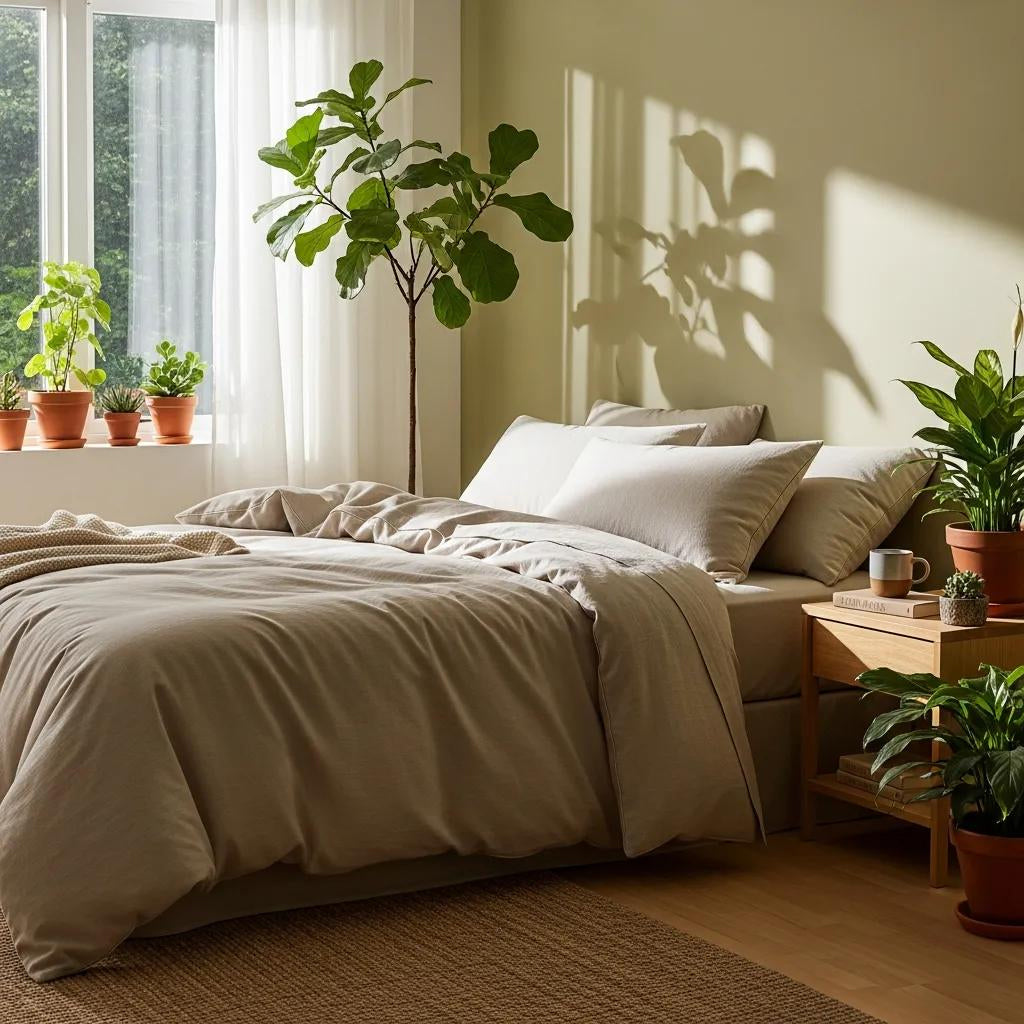
Start with a neutral base and add two complementary accents to avoid trend-driven churn. For example, pair muted sage or olive with warm beige and a charcoal accent to create a timeless palette. Mix a smooth organic bamboo sheet set with a heavier woven throw or knitted blanket for seasonal layering — the contrast adds tactile interest and practical warmth. Pick pieces that launder on gentle cycles to reduce maintenance and keep textiles in use longer.
These colour and texture choices help your bedroom stay stylish without frequent purchases. Next: simple care steps to maximise the lifespan of organic bamboo bedding.
Caring for your organic bamboo bedding to maximise longevity
Simple care extends the life of your bamboo bedding and reduces its environmental cost by delaying replacement. Gentle, regular washing and low-heat drying preserve fibre strength and softness. Small changes — choosing mild detergent, washing on a gentle cycle and air-drying when possible — support both durability and household resource efficiency. The subsections below give quick, actionable best practices and explain how care choices support sustainability.
Below is a compact action-to-benefit table showing how specific care decisions affect durability and environmental impact.
| Action | Attribute Affected | Sustainability Benefit |
|---|---|---|
| Wash on a gentle cycle | Fabric strength and fibre alignment | Reduces micro-damage and extends usable life |
| Use mild, phosphate-free detergents | Surface softness and colour retention | Minimises chemical load in wastewater |
| Air-dry or low-heat tumble | Shrinkage and hand feel | Preserves fibre structure and saves energy compared with high-heat cycles |
Small changes in washing habits yield real longevity gains that cut the need for replacements. The section below gives step-by-step care guidance for bamboo bedding.
What are the best practices for washing and maintaining bamboo bedding?
Keep bamboo bedding soft and resilient by following a few straightforward steps: wash on a gentle cycle with a mild detergent, avoid bleach and fabric softeners that can break down fibres, and use cool-to-warm water to protect dyes and seams. After washing, reshape damp items and air-dry where possible; if you use a dryer, select a low-heat setting to avoid excessive shrinkage. Rotate sets regularly and store unused linens in breathable containers to reduce wear and keep them fresh between uses.
- Wash on a gentle cycle with a mild detergent.
- Avoid bleach and fabric softeners.
- Air-dry when possible or use a low-heat tumble setting.
These simple steps help retain the softness and structure of bamboo bedding and directly support sustainability by extending product life.
How does proper care support sustainability and durability?
Good care reduces the lifecycle environmental cost of bedding by keeping items in use longer, which lowers the frequency of manufacturing and disposal. Every set you don’t replace saves the embodied resources required to make a new one. Practical habits — washing less often when appropriate, using gentle settings and repairing small damage — add up to meaningful reductions in material throughput. Thinking in lifecycle terms makes care a simple but powerful sustainability action.
Adopting these routines creates a culture of care that complements smart purchasing and leads naturally into brand-level policies that reduce purchase risk.
We provide care guidance that follows these best practices and support our products with customer-friendly policies, including convenient delivery and a straightforward returns process. Clear terms make it easy to try sustainable bedding at home without worry.
Adore Earth's commitment to sustainability and customer satisfaction
Adore Earth is Australian-designed and operated, specialising in 100% organic bamboo bedding. Our focused range includes bamboo sheet sets, quilt cover sets, quilts, mattress toppers and pillowcases. We emphasise comfort, care and conservation — highlighting softness, skin and hair friendliness, temperature regulation through Coolweave™ structure, pet-hair resistance, hypoallergenic/antibacterial attributes and strong sustainability practices. These product features sit alongside customer guarantees designed to reduce purchase friction and support long-term use.
Transparent brand practices matter, as clear information is key to engaging environmentally conscious shoppers.
Our customer-friendly policies, including generous trial periods, convenient delivery, and a straightforward returns process, are intended to increase buyer confidence and make it easier to test bedding in your own home. When comparing eco-conscious brands, clear return windows and delivery terms are useful practical filters alongside material and care considerations. Below, we outline the brand practices that matter to informed buyers.
What ethical practices does Adore Earth follow?
We design and operate in Australia with a focused commitment to organic bamboo products and customer-centred policies that encourage responsible consumption. Our product claims — comfort, Coolweave™ temperature management, hypoallergenic performance and pet-hair resistance — are paired with clear operational policies like convenient delivery and easy returns. Those steps reduce the barrier to buying higher-quality bedding and give customers time to confirm comfort and fit at home.
These practices act as trust signals: clear product focus and simple return options make sustainable purchases less risky and help households shift toward longer-lasting textiles.
How do our customer-friendly policies enhance trust?
Our customer-friendly policies give customers a generous trial window to evaluate bedding in their home. This reduces hesitation around feel, temperature performance and fit — the things that matter most with linen. A clear trial and return process supports the sustainable goal of buying fewer, better-quality items by making informed trial and retention easier.
Coupling these supportive policies with clear care guidance and product detail helps readers become confident buyers while reinforcing why durable, organic bamboo bedding is a sustainable choice.
Frequently Asked Questions
What is the environmental impact of bamboo farming compared to other materials?
Bamboo typically has a lower environmental impact than conventional crops like cotton. It grows quickly and — when managed responsibly — often needs less water and fewer agrochemicals. Its root system helps prevent soil erosion, and durable bamboo fabrics reduce the need for frequent replacements. Compared with conventional cotton, which can use a lot of water and chemicals, sustainably grown bamboo is generally a more resource-efficient option.
Can bamboo bedding help with allergies and skin sensitivities?
Yes. Bamboo fibres are naturally smooth, and many bamboo textiles are hypoallergenic and resistant to dust mites, mould and mildew — common triggers for allergy sufferers. The gentle surface also reduces friction on sensitive skin. Regular washing and proper care keep these benefits working over time, making bamboo a good option for people with skin sensitivities or allergies.
How does the durability of bamboo bedding compare to other materials?
Bamboo bedding is known for lasting well when cared for properly. Strong fibres and thoughtful weaving mean bamboo sets can remain soft and intact for years, often outlasting cheaper cotton or synthetic alternatives. That longevity lowers your cost-per-use and reduces waste, making bamboo a practical, sustainable choice.
What are the best ways to style a bedroom with bamboo bedding?
Styling with bamboo is simple and versatile. Aim for earthy tones and natural textures for a calming look: pair bamboo sheets with neutral duvet covers and a few accent pillows. Add natural materials like timber bedside tables or ceramic accessories to enhance the organic feel. Layer textures — a knitted throw or linen curtains — to add depth without overcomplicating the palette.
Are there specific certifications to look for when buying bamboo bedding?
Look for independent certifications that confirm low chemical use and responsible processing. OEKO-TEX® Standard 100 verifies textiles are free from certain harmful substances, while the Global Organic Textile Standard (GOTS) confirms organic farming and responsible processing across the supply chain. These labels help you choose products that meet higher environmental and social standards.
How can I ensure my bamboo bedding lasts longer?
Follow a few care rules to maximise lifespan: wash on a gentle cycle with mild, phosphate-free detergent; avoid bleach and fabric softeners; air-dry when possible or use a low-heat dryer setting. Rotate sets regularly and store linen in a cool, dry place. These steps keep fibres healthy and reduce the need for early replacement.
