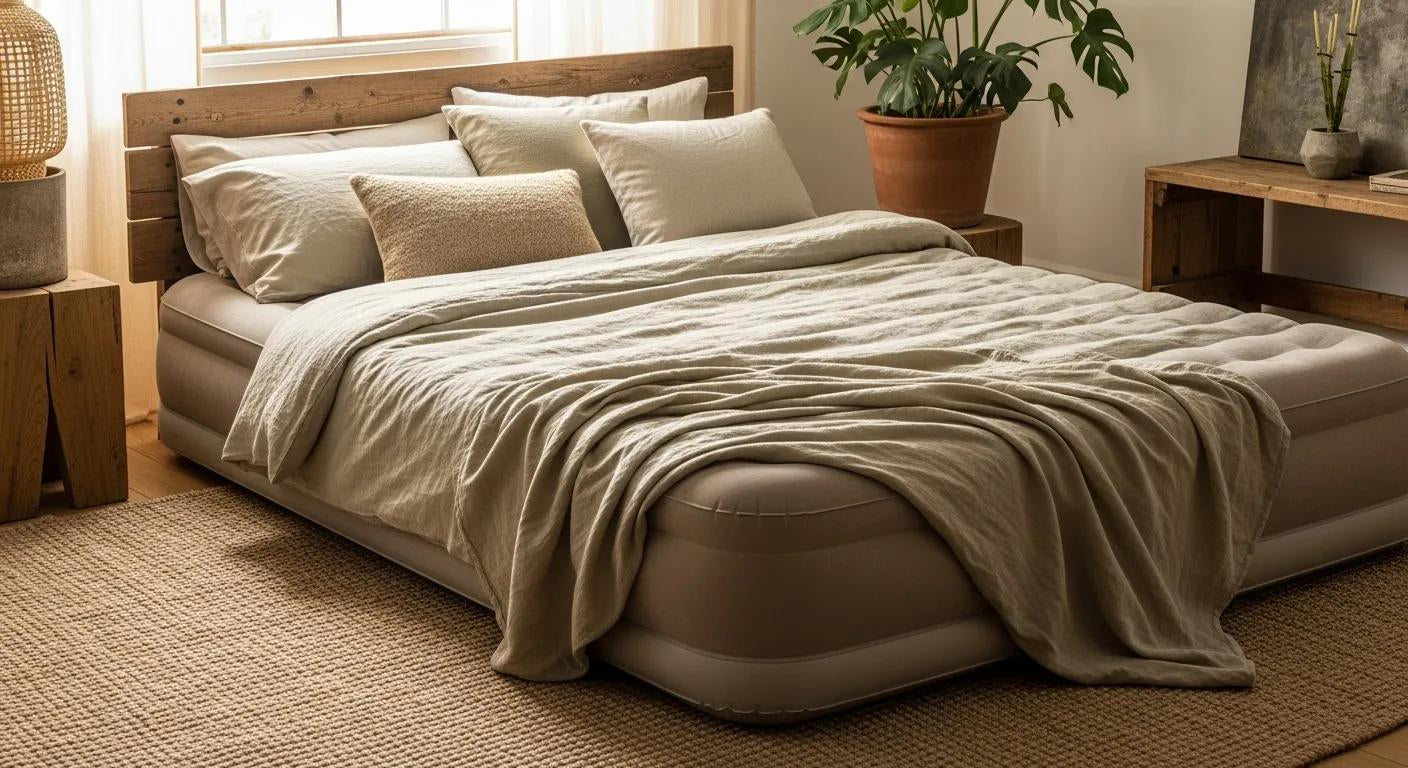
Eco-friendly air mattresses — sleep more sustainably
A sustainable air mattress is an inflatable bed built to reduce environmental harm and support healthier indoor air. That means choosing non-toxic, recyclable or renewable materials and durable construction so the product performs well and lasts longer. This guide explains why those choices matter for your health, the planet and your long-term savings, and walks through the key things to weigh: materials and certifications, sleep and health impacts, environmental footprint, and durability.
Many Aussies juggle portability, comfort and the environmental impact of inflatable bedding. Sustainable air beds address those trade-offs by moving away from PVC-heavy builds toward PVC-free options like TPU or natural-latex hybrids. Read on to learn which materials to look for, which certifications reduce VOC and chemical risk, how longevity lowers waste and overall spending, and which choices work best for different uses. If you want practical help, Adore Earth’s sustainability mission — focused on organic, renewable textiles and eco-friendly home goods such as organic bamboo bedding, mattress toppers and protectors — sits at the same values we cover here. You can contact us for advice on sustainable sleep solutions; a short call-to-action appears at the end of this guide. First, let’s define what truly makes an air mattress sustainable.
What makes an air mattress sustainable? Key materials and certifications explained.
At its core, a sustainable air mattress is judged by the materials used, the absence of harmful additives and credible certifications that limit environmental and health harms.
The most important change is material substitution — swapping phthalate-heavy PVC for alternatives such as thermoplastic polyurethane (TPU), natural latex or responsibly sourced recycled plastics, and finishing with organic textile covers. Those choices reduce off-gassing and make recycling more feasible.
For sleepers, the advantages are clear: lower indoor VOC exposure for better air quality, and reduced embodied carbon and waste at end-of-life.
When choosing a sustainable inflatable, look for these primary materials and certifications, and we'll explain how each contributes to health and environmental performance.
Look for these materials and labels: TPU, natural latex, recycled-plastic cores and organic textile covers, alongside certifications such as OEKO-TEX, CertiPUR-US and GOTS that signal lower chemical risk and verified organic content. Here’s a quick, at-a-glance list of the main cues to watch for.
- TPU (thermoplastic polyurethane): A PVC-free, elastic polymer with strong puncture resistance and typically better recycling options than PVC.
- Natural latex: A renewable, partly biodegradable material that brings resilience and breathability in layered constructions.
- Recycled-plastic cores: Reduce demand for virgin polymers, but need clear recycling routes to avoid downcycling.
- Organic textile covers (GOTS-certified cotton or bamboo): Improve breathability and reduce synthetic finishes that can trap allergens.
Overall, TPU and natural-latex hybrids usually offer an excellent balance of durability and lower chemical risk, while recycled plastics cut virgin material use but rely on clear recycling pathways. Knowing these trade-offs helps you prioritise what matters most for both health and longevity.
Which eco-friendly materials are used in sustainable air mattresses?
The main eco-friendly materials in modern sustainable air mattresses are TPU, natural latex, recycled plastics and organic textile covers. TPU gives a PVC-free chamber that’s flexible and puncture-resistant and typically emits fewer VOCs than PVC. Natural latex brings renewability and partial biodegradability while offering resilient cushioning. Recycled-plastic cores lower virgin-polymer demand but work best when designed as mono-materials so they can actually be recycled. Organic cotton or bamboo covers (GOTS-certified when possible) improve breathability and reduce chemical finishes that can trap allergens. Choosing materials means balancing durability, recyclability and realistic end-of-life options to suit your priorities.
What certifications ensure the sustainability of air mattress materials?
Certifications are third-party signals that claims are credible and chemical emissions are controlled. CertiPUR-US applies to foams and indicates low levels of ozone-depleting substances, heavy metals and phthalates.
OEKO-TEX Standard 100 focuses on textile safety, confirming fabrics are free from harmful levels of certain substances, while GOTS certifies organic fibre content and environmentally responsible processing for natural covers.
For TPU and recycled plastics, look for manufacturer transparency on resin sources and recycling streams. Recognised recycled-content claims and clear certification numbers in product listings reduce the risk of greenwash and show a genuine commitment to safer, more sustainable materials.
How do sustainable air mattresses improve health and sleep quality?
Sustainable air mattresses can improve health and sleep mainly by reducing exposure to harmful chemicals, limiting allergen build-up and improving breathability and temperature regulation. Non-toxic materials and certified textiles cut off-gassing of VOCs and phthalates, while breathable covers and natural-fill layers help manage the microclimate around the sleeper. The result is better indoor air quality and fewer irritations for sensitive sleepers, which can mean fewer nighttime wake-ups and more restorative sleep. We'll explore how PVC-free designs and good maintenance reduce allergens and chemical exposure.
Direct health benefits include lower VOC emissions, reduced phthalate exposure and less skin or respiratory irritation — improvements that matter especially in smaller Aussie homes with limited ventilation. Key sleep and health advantages are summarised here.
- Lower VOCs and phthalates: Better indoor air quality and fewer headaches, throat or eye irritations.
- Hypoallergenic covers and materials: Less dust-mite and pet-hair build-up for allergy sufferers.
- Improved temperature regulation: Breathable textiles and latex layers help prevent overnight overheating.
Reducing chemical exposure is only part of the picture. Routine care — washing removable covers, airing new inflatables and using mattress protectors — further cuts allergen load and extends performance. Pairing mindful maintenance with better materials delivers lasting health benefits over the mattress's lifespan.
What are the benefits of non-toxic, PVC-free air mattresses?
Non-toxic, PVC-free air mattresses lower off-gassing and long-term chemical exposure by removing common PVC additives like phthalates. Switching PVC for TPU or natural latex removes major sources of persistent VOCs and reduces noticeable odour after inflation, improving the immediate sleep environment. Health benefits can include fewer respiratory issues, less skin irritation and a lower cumulative burden of man-made chemicals for people who spend many hours sleeping. Aussie shoppers seeking non-toxic options should prioritise clear PVC-free claims and textile certifications to reduce the chance of unwanted chemical exposure, while keeping the portability and convenience of inflatable bedding.
How do sustainable air mattresses reduce allergens and VOC exposure?
They do this through material choice and simple upkeep: certified organic or naturally sourced covers minimise chemically treated textiles that can trap irritants, while dense non-PVC chambers cut off-gassing. Removable, washable toppers and hypoallergenic covers create a physical barrier against dust mites and pet hair, and airing a new mattress before use speeds the dissipation of any residual VOCs. Regular cleaning and protective covers improve hygiene and extend useful life. Together, safer materials and routine care help maintain better indoor air quality over time.
What environmental advantages do sustainable air mattresses offer?
Sustainable air mattresses bring environmental benefits across production, use and end-of-life by lowering embodied carbon, reducing toxic waste and enabling recycling or biodegradation for specific parts. Choosing renewable or recycled materials and designing for repairability reduces resource use and landfill impact over the product's life. Main environmental gains include a smaller carbon footprint over the product lifecycle, less landfill waste when parts are recyclable or biodegradable, and resource savings when recycled feedstocks replace virgin polymers. This section explains how material choices and longevity combine to reduce impact and offers practical end-of-life options.
Headline environmental advantages include lower virgin-plastic demand thanks to recycled materials, reduced embodied emissions from renewable inputs like natural latex, and fewer replacements because of greater durability. Key benefits are listed here.
- Reduced embodied carbon: Renewable or recycled materials typically carry lower lifecycle emissions than PVC.
- Less landfill waste: Recyclable or biodegradable components prevent whole-device disposal.
- Resource efficiency: Longer-lasting products cut cumulative production impacts.
Natural-latex and recycled-material approaches generally reduce lifecycle impact, but good recycling infrastructure is needed to realise end-of-life benefits. Where possible, prioritise clear recycling routes and manufacturers who offer take-back or repair programmes.
How do sustainable air mattresses lower carbon footprint and waste?
They do this by using renewable or recycled inputs and by lasting longer, which reduces how often you replace them and therefore cuts the number of production cycles per person. The two main levers are substituting lower-carbon materials (for example, natural latex instead of PVC) and increasing product longevity through tougher materials and repairable design. The result is fewer kg CO2e per year of use and lower overall resource consumption. For Aussie buyers, choosing mattresses with repair kits, durable valves and recyclable materials will help minimise both carbon and waste footprints — choices that add up over time.
What role do biodegradability and recyclability play in eco-friendly air beds?
Biodegradability and recyclability determine what actually happens at end-of-life: biodegradable parts can break down under the right conditions, while recyclable components can be reprocessed into new products, reducing virgin material demand. The practical value depends on local facilities — a recyclable TPU chamber only helps if TPU collection and processing are available. Consumers should favour mono-material construction for easier recycling, consider biodegradable latex where industrial composting exists and ask about manufacturer take-back schemes to keep items out of landfill. Designing for disassembly and choosing materials with clear recycling routes are key to delivering the intended environmental benefits.
Why is durability important in sustainable air mattress options?
Durability is essential because a longer useful life reduces replacement frequency, cutting cumulative material use, manufacturing emissions and landfill waste. Put simply: every extra year of reliable use spreads the embodied impact of production over more user-years, lowering overall spending over time and the product’s lifecycle burden. Durability also brings economic savings for the owner and less downstream waste for the planet. We'll explain which design features to prioritise and how repairability and quality materials lower overall spending and environmental impact.
To make durability practical, look for reinforced seams, thicker TPU films or latex layers, high-quality valves and replaceable parts. These features may require a higher initial investment, but will reduce long-term spending and waste. Key durability attributes to prioritise are listed here.
- Reinforced seams and layered constructions for puncture resistance.
- High-quality valves and inflation systems to prevent pressure loss.
- Simple repairability (patch kits, replaceable valves) to extend usable life.
TPU chambers combined with reinforced textile covers and easy repair options typically give excellent long-term value and environmental outcomes. Prioritising those features cuts replacement frequency and supports sustainable ownership.
How does durability contribute to sustainability and cost-effectiveness?
Durability spreads embodied energy and materials across more years of use, which lowers lifecycle emissions per year and reduces overall spending over time. A higher-quality inflatable with built-in quality and repairability usually offers better value over time than a cheap, short-lived alternative. Ways to extend life include using protective covers, avoiding rough surfaces when inflating outdoors, storing the mattress deflated in a cool, dry place and repairing punctures promptly with the supplied kit. Focusing on repairability and strong construction benefits both household budgets and wider sustainability goals.
Which materials enhance the lifespan of eco-friendly air mattresses?
Materials that extend lifespan include thicker TPU films, layered natural-latex inserts and robust textile covers with reinforced seams. These elements combine to resist punctures, maintain structure and withstand wear. TPU and high-density textiles protect internal chambers from abrasion, while natural-latex layers resist compression over time and preserve comfort. Valve quality matters too — a well-made valve reduces slow leaks and makes repairs simpler. Availability of spare parts (patch kits, replacement valves) also improves real-world longevity. Choosing designs that balance repairability with strong primary materials is the most reliable route to a sustainable, cost-effective mattress.
Which sustainable air mattress options suit different needs and uses?
Matching a sustainable air mattress to a use case — camping, guest bedding or everyday sleeping — means balancing portability, insulation, support and eco-credentials. The principle is use-case alignment: prioritise puncture resistance and insulation for outdoor use, compact storage and washable covers for guest beds, and robust support plus comfort features for nightly sleepers. The benefit is a product that fits how you live, reducing the chance of early replacement because of misuse or mismatch. Below, we offer practical buying guidance for Aussie consumers.
For camping and outdoor use, prioritise TPU construction, strong seam work, a higher R-value or built-in insulation and a repair kit; these features cut puncture risk and keep you warmer in cooler conditions. Guest beds can favour lighter, storable designs with washable organic covers, while everyday sleepers should choose thicker constructions, internal support and options designed for lasting quality. The short comparison list below summarises priorities by use case.
- Camping: Durable TPU chambers, repair kit, insulation (higher R-value), compact packing.
- Guest beds: Easy storage, washable organic covers, moderate durability for occasional use.
- Everyday use: Higher support (thicker construction), reinforced valves, and options built for lasting quality and repairability.
As a practical note, Adore Earth’s expertise in sustainable home textiles and organic bedding means we can advise customers who want integrated sleep solutions. If you’re planning a bespoke sustainable sleep setup or a commercial sustainability project, get in touch for tailored guidance. For everyone else, matching the mattress to your use case will lengthen its life and improve health and environmental outcomes.
- Guest use recommendation: Lightweight TPU chamber with organic, washable cover for simple storage and hygiene.
- Everyday use recommendation: Thicker, reinforced TPU or latex-hybrid construction with strong valves and repair options for nightly support.
- Maintenance tip: Always use a mattress protector and follow airing and washing guidance to prolong useful life.
These practical choices help buyers avoid mismatches that lead to early discard, and they reinforce the sustainability principle that the most sustainable product is the one that’s used well for many years.
Ready for a Sustainable Sleep Solution?
For help pairing sustainable bedding with your home, Adore Earth can recommend matched organic bedding, toppers and protectors to build a cohesive, eco-friendly sleep system. We welcome enquiries for bespoke recommendations and commercial projects.
Frequently Asked Questions
What should I consider when choosing a sustainable air mattress for camping?
Choose durability, insulation and packability. TPU offers puncture resistance and flexibility; a higher R-value or an insulating layer is important for warmth on cool nights; and a repair kit lets you fix damage in the field. Aim for a compact design that balances weight and toughness to reduce environmental impact and avoid early failure.
How can I maintain my sustainable air mattress to extend its lifespan?
Clean and air it regularly to prevent moisture and mould. Use a protective cover to guard against dirt and punctures, avoid inflating on rough surfaces, and store it deflated in a cool, dry place when not in use. Repair punctures promptly with the supplied kit and follow the manufacturer’s care instructions to keep performance high.
Are there specific brands known for eco-friendly air mattresses?
Yes. Look for brands that prioritise TPU, natural latex or recycled components and publish certifications such as CertiPUR-US, OEKO-TEX or GOTS. Adore Earth focuses on organic, renewable materials and transparent sourcing, demonstrating a commitment to genuine, eco-friendly options.
What are the environmental impacts of traditional air mattresses compared to sustainable options?
Traditional air mattresses made from PVC have a higher carbon footprint and are harder to break down, contributing more to pollution. Sustainable alternatives use renewable or recycled materials, are built to last and can be recycled or composted in part, which cuts waste and emissions. Choosing sustainable options reduces your ecological impact over the long term.
Can sustainable air mattresses be recycled at the end of their life?
Many sustainable air mattresses are designed with recyclability in mind. TPU and natural latex can often be recycled where facilities exist. Check local recycling services and ask manufacturers about take-back schemes — returning old products through a manufacturer programme is a reliable way to keep them out of landfill.
How do I know if an air mattress is truly eco-friendly?
Look for third-party certifications such as CertiPUR-US, OEKO-TEX or GOTS, which indicate lower chemical emissions and verified practices. Check the materials list for TPU, natural latex or recycled components, and review the brand’s transparency on sourcing and manufacturing. Clear certification numbers also help spot genuine eco-friendly products.
What are the health benefits of using a sustainable air mattress?
Sustainable air mattresses reduce exposure to harmful chemicals and allergens. Non-toxic materials limit off-gassing of VOCs and phthalates, improving indoor air quality. Hypoallergenic, washable covers cut dust-mite and allergen build-up, and breathable materials help regulate temperature — all of which support a more comfortable, restorative night’s sleep.