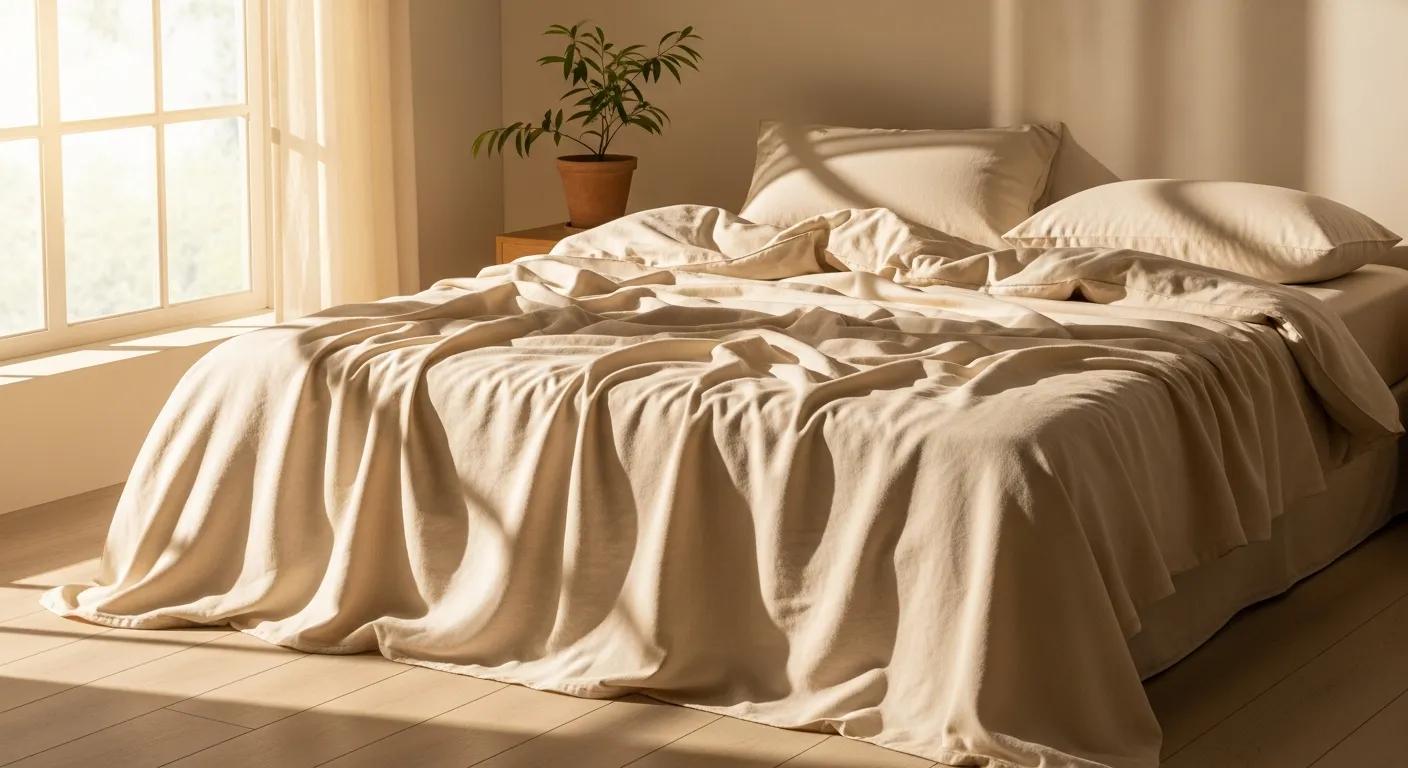
Bamboo sheets are made from fibres sourced from bamboo — usually turned into viscose from bamboo or lyocell — and they’re prized for a silky feel plus built‑in moisture control. For Australians who sleep hot, live in humid coastal zones, or want lower‑impact home textiles, bamboo can be a smart choice. We'll help you discover the best bamboo bedding for comfort, cooling, hypoallergenic qualities and sustainability so you can pick what suits your climate and priorities. We explain how bamboo behaves at the fibre level, spell out key certifications and weave choices, compare it to cotton and microfiber, and map the main brand features available in Australia. You’ll also find clear buying tips for hot sleepers and allergy-prone households, plus practical care advice to keep sheets soft and long‑lasting. Let's explore comfort, durability and environmental impact in the Australian context.
Why bamboo sheets work well for Australian sleepers
Bamboo sheets perform well across Australia because the fibre structure and common weaves deliver effective moisture wicking and breathability — they help manage the microclimate at your skin so you’re less likely to sweat at night. The fibres are smooth and often hollow, encouraging airflow; viscose and lyocell processing affect how soft and drapey the final fabric feels, and both can produce a cooler sleep surface than many synthetic options. For people with sensitive skin, bamboo’s low‑lint surface and reported antibacterial qualities — when paired with transparent processing and certification — can reduce irritants. Environmentally, bamboo grows quickly and usually needs fewer inputs than some conventional crops, which appeals to shoppers looking for lower‑impact bedding.
Practically, bamboo delivers lasting softness, good moisture management and a smaller chemical footprint when certified. Those qualities suit coastal humidity, inland heat and shifting seasonal climates. Here are the main benefits for Australian sleepers at a glance:
- Cooling performance: Breathable fibres move heat and moisture away from the body for a cooler sleep.
- Hypoallergenic traits: Low lint and antibacterial tendencies can reduce common irritants for sensitive skin.
- Sustainability: Fast‑growing raw material with the potential for lower water and chemical use when responsibly produced.
Next, we’ll look at the fibre and weave mechanics that create cooling and breathability, so you know what to look for when shopping.
How bamboo sheets keep you cool and breathable

Bamboo’s cooling comes from a mix of fibre structure and how the fabric is woven. Viscose from bamboo is smooth and absorbent, pulling sweat into the fabric where it can spread and evaporate, while looser or purpose‑built weaves like Coolweave™ add tiny air channels that speed airflow and heat loss. Put simply: more surface area plus better airflow = quicker evaporation and a cooler feel. If you sleep hot, prioritise a breathable weave and moisture‑wicking finish to reduce nighttime temperature spikes and improve sleep continuity.
Knowing this helps you focus on the features that matter — look for product pages that describe weave structure and list certifications rather than relying on broad marketing claims.
Why bamboo sheets are often labelled hypoallergenic and eco‑friendly

Bamboo sheets are frequently called hypoallergenic because the smooth fibres shed less lint and dust than many alternatives, and some manufacturing methods produce fabrics with antibacterial qualities that reduce common bedroom irritants. In practice, hypoallergenic means fewer triggers for dust mites and less surface irritation for sensitive skin — though individual responses vary. The environmental story depends on how the bamboo is processed: mechanically processed bamboo has a lower impact, while chemically processed options differ in footprint. Certifications such as OEKO‑TEX Standard 100 signal that finished textiles contain lower levels of harmful residues. For sensitivity and sustainability, prioritise clear certification and transparent sourcing information.
Knowing this helps you make informed choices: if sensitivity and sustainability are priorities, choose bamboo that’s certified and transparent about how the fibres were made. That brings us to how brands in Australia present their claims to buyers.
If you’re specifically looking for an Australian supplier that highlights certified bamboo and clear sustainability messaging, Adore Earth positions itself as an Australian‑owned brand offering 100% organic bamboo bedding with temperature‑regulating weaves — a quick orientation for brand‑aware readers before the comparison continues.
How Adore Earth bamboo sheets stand out in Australia
Adore Earth focuses on premium, responsibly sourced bamboo bedding and points to a weave engineered for temperature regulation, alongside organic fibre claims and recognised textile certification. Their main differentiators are 100% organic bamboo, a Coolweave™ structure designed to improve airflow, OEKO‑TEX Standard 100 certification to limit harmful residues, Australian ownership, plus a commitment to customer satisfaction and convenient delivery across Australia. Those service elements combine with product features to reassure online buyers, balancing performance and purchase confidence.
Our product range and competitive pricing are clear selling points: Adore Earth’s bedding line includes bamboo sheet sets, quilt cover sets, quilts, mattress toppers and pillowcases, with sheet set prices at an accessible price point depending on size and offers. Our commitment to customer satisfaction and convenient delivery cuts the friction for domestic buyers, while Coolweave™ and OEKO‑TEX provide verifiable performance and safety cues on product pages. Together, these factors form a credible value proposition for Australians seeking cooler sleep and lower‑impact bedding.
What is Coolweave™ and why does it matter
Coolweave™ is a weave engineered to boost airflow and spread heat more effectively than tightly packed sateen weaves, giving a lighter, more breathable fabric without losing drape or softness. It’s achieved by adjusting yarn spacing and the weave pattern to create micro‑channels that help convective cooling and faster moisture evaporation. The benefits are straightforward: quicker heat dissipation, a cooler feel through the night, and the smooth hand consumers expect from premium bamboo. Check product pages for visible weave descriptions and certification details to confirm the claims before you buy.
If temperature control is your priority, weave engineering like Coolweave™ is a practical feature to put near the top of your checklist — it complements fibre choice to deliver consistent cooling performance.
Which certifications and sustainability practices does Adore Earth follow?
Adore Earth highlights OEKO‑TEX Standard 100 certification and the claim of “100 percent organic bamboo,” signalling attention to low residual chemical levels and responsible raw‑material sourcing where stated. OEKO‑TEX Standard 100 independently verifies that textiles do not contain harmful levels of specific substances — useful for allergy‑prone sleepers and families with children. The “100 percent organic bamboo” claim suggests the brand sources bamboo fibres grown and processed to reduce synthetic inputs; shoppers should still check product pages for full certification details to confirm transparency.
On the operational side, Australian ownership and a simple returns policy — our commitment to customer satisfaction and convenient delivery — lower purchase risk and make it easier to test cooling or sensitivity claims at home. Those customer‑friendly policies work alongside certification to give buyers both performance signals and practical support.
How bamboo compares to other bedding materials in Australia
Bamboo usually outperforms many alternatives on moisture management and perceived coolness, blending softness with breathability for a wide range of Australian climates. Cotton and microfiber each have trade‑offs in feel, care and sustainability. At a material level: bamboo (viscose or lyocell) excels at moisture transport and a smooth surface; cotton offers durability and many weave options but can retain more heat unless you choose percale or linen; microfiber is low cost and hardy but generally less breathable and has a higher environmental footprint. Which is best depends on whether you prioritise cooling, sensitivity or budget.
The table below summarises strengths and a short rationale for each material to help Australian shoppers decide quickly.
| Material | Breathability / Cooling | Hypoallergenic / Sensitivity | Durability / Care |
|---|---|---|---|
| Bamboo (viscose/lyocell) | Highly effective moisture‑wicking and airflow | Generally good — smooth surface, low lint when certified | Good — moderate care; avoid high‑heat drying |
| Cotton (percale/sateen) | Moderate — depends on weave (percale cooler than sateen) | Moderate — natural fibre, but lint and finishes vary | High — robust, tolerates regular washing |
| Microfiber (polyester) | Low–Moderate — can trap heat | Variable — synthetics may irritate sensitive skin | Very high — durable and low‑maintenance |
Bamboo vs cotton — which suits Australian climates?
Bamboo and cotton both work well in Australia, but shine in different situations. Bamboo’s superior moisture‑wicking and silky surface make it a strong default for humid coastal areas and hot sleepers, while cotton’s variety of weaves — percale for crisp coolness, sateen for a silky sheen — suits shoppers after a traditional texture or easy high‑temperature washability. Thread count is less important than fibre type and weave when it comes to comfort. Choose bamboo for temperature regulation and a silky hand; choose cotton if you want a crisp, classic feel and simple laundering at higher temperatures.
If your region stays consistently hot or humid, favour moisture management and a breathable weave. If you prefer a crisp, traditional aesthetic and frequent high‑heat washing, cotton may be the better fit.
Bamboo vs microfiber — why bamboo often wins
Bamboo typically beats microfiber for breathability, moisture management and environmental considerations, while microfiber is attractive for low cost and heavy‑use durability. Microfiber traps heat more readily and is made from synthetic polymers, raising microplastic and biodegradability concerns; bamboo‑derived viscose or lyocell comes from a renewable resource and — when certified — is a lower‑impact alternative. Bamboo also tends to feel cooler and silkier against the skin, which can improve sleep quality. That said, microfiber’s affordability and easy care make it a pragmatic option for high‑traffic or budget situations where cooling isn’t essential.
For shoppers weighing sustainability and overnight comfort, bamboo is often the better long‑term choice; for tight budgets or specific durability needs, microfiber remains a practical fallback.
Top bamboo sheet brands in Australia — how they compare
The table below maps common brand attributes — material, typical weave, certification cues, cooling level and price band — so you can compare leading options at a glance. It highlights where Adore Earth and similar offerings align with common buyer priorities.
Use these brand attributes to quickly identify fits for hot sleepers, allergy‑prone households and eco‑minded buyers.
| Brand / Product Line | Material | Typical Weave | Certification | Cooling | Price Range |
|---|---|---|---|---|---|
| Adore Earth (highlight) | 100% organic bamboo | Coolweave™ (engineered weave) | OEKO‑TEX Standard 100 | High | Competitive |
| Other leading brands | Bamboo viscose/lyocell | Sateen/percale variants | Varies (look for OEKO‑TEX) | Moderate–High | Varies |
| Value‑focused brands | Bamboo blends or microfiber | Sateen or synthetic weaves | Limited or none | Moderate–Low | Accessible |
How Adore Earth compares to Ecoy, Ettitude and Ecosa
Rather than focusing on brand names alone, compare the core attributes that matter: material purity, weave engineering, certification and our commitment to customer satisfaction. Adore Earth highlights 100% organic bamboo, an engineered Coolweave™ structure, OEKO‑TEX Standard 100 certification and our commitment to customer satisfaction and convenient delivery across Australia — a combination that addresses cooling, safety and purchase confidence. Other brands may emphasise different trade‑offs between weave, certification or price; the best pick depends on whether you prioritise maximum cooling, strict organic sourcing or a lower entry price.
Match brand claims to your needs: verified certifications for sensitivity, a cooling weave for hot sleepers, and our dedication to your satisfaction if you want to experience bedding performance at home.
Pros and cons of leading bamboo sheet brands
Across top bamboo offerings, common strengths are exceptional softness, good temperature regulation and renewable raw materials. Typical trade‑offs include a price premium versus basic alternatives and the need for gentle laundering to preserve feel. Pros centre on sleep comfort and sustainability; cons often involve special care, occasional pilling on lower‑quality blends, and inconsistent certification transparency. To reduce risk, check labels for certification, favour engineered weaves for cooling and follow care instructions to extend lifespan.
When deciding, weigh these pros and cons against your priorities — if cooling and sustainability matter most, accept a modest price premium and buy quality you’ll keep longer.
How to choose the best bamboo sheets for your needs
Choosing the right bamboo sheets means matching product features to how you sleep and what you value. Hot sleepers should prioritise weave and cooling structure; sensitive skin requires verified certifications and low‑residue finishes; budget buyers focus on blends and durability. Use the checklist below to narrow options, then review product pages for certification and our commitment to customer satisfaction.
The checklist turns needs into clear purchase criteria:
- Hot sleepers: Prioritise engineered cooling weaves and lyocell or viscose labelled for moisture‑wicking.
- Sensitive skin: Choose OEKO‑TEX Standard 100 or equivalent certification and 100% organic fibre claims.
- Budget shoppers: Compare blends and our commitment to durability; calculate long‑term cost‑per‑year.
- Eco‑conscious buyers: Verify organic sourcing claims and independent certifications.
Below are concrete recommendations tied to common Australian use‑cases for quick reference.
| Use‑case | Key Features to Prioritise | Recommended Product Traits |
|---|---|---|
| Hot sleeper | Cooling weave, strong moisture‑wicking | Coolweave™ or percale‑like structure, lyocell/viscose bamboo |
| Sensitive skin | Low residues, independent certification | OEKO‑TEX Standard 100, 100% organic bamboo |
| Budget | Durability, easy care, and our commitment to quality | Blended options or robust weaves, clear return policy |
| Eco‑conscious | Renewable sourcing, low‑impact processing | Organic bamboo claims, transparent certification |
Which bamboo sheets suit hot sleepers and sensitive skin?
Hot sleepers should look for bamboo sheets that explicitly call out a cooling or engineered weave and strong moisture‑wicking performance — examples include Coolweave™ or percale‑style constructions in lyocell or viscose. For sensitive skin, prioritise OEKO‑TEX Standard 100 or equivalent verification and clear organic fibre claims to minimise the chance of chemical irritants and to support low‑lint performance. If you need both cooling and low irritation, pick a certified fibre with a cooling weave to get the best compromise.
Apply the checklist: if cooling is your main concern, pick weave first; if sensitivity leads, focus on certification — and ideally, choose a product that meets both requirements.
Sizes, colours and weave options available in Australia
Australian mattress sizes range from Single through Super King, and reputable bamboo sheet sets typically include fitted sheets, flat sheets and pillowcases sized to local standards. Many brands also offer quilt cover sets and mattress toppers. Colour choices usually lean neutral (white, ivory, grey, sand) plus seasonal accent tones, so it’s easy to match your existing décor. Common weave options are sateen for a glossy finish, percale‑style for a crisp matte feel, and engineered cooling weaves for enhanced airflow. The weave you pick affects both the look and the hand: sateen is lustrous, percale is crisp, and engineered weaves prioritise breathability and a lighter drape.
Knowing Australian sizes and how weave changes appearance will help you choose sheets that fit and look right in your bedroom.
How to care for bamboo sheets to keep them soft and durable
Good care keeps bamboo sheets soft and extends their life by limiting mechanical wear, dye fade and chemical damage. Key principles are gentle wash cycles, mild detergents without bleach or optical brighteners, low‑to‑medium heat drying or line‑drying, and avoiding fabric softeners that can coat fibres. Regular care reduces pilling and preserves fibre alignment; store sheets in a cool, dry place, folded rather than compressed to avoid mildew and keep drape. A little attention to laundering goes a long way in protecting your initial investment.
These habits lead to specific washing and maintenance steps that minimise wear and prolong sheet life, which we summarise below.
Best practices for washing and maintaining bamboo bedding
Keep bamboo sheets soft and durable with a few simple steps: wash on a gentle cycle with cool to warm water, use a mild liquid detergent without bleach or fabric softeners, and don’t overload the machine to reduce friction. Line‑dry when you can, or tumble on low heat and remove sheets while slightly damp to cut wrinkles and preserve fibre loft; if ironing is needed, use a low setting. Treat stains promptly with a gentle stain remover and avoid chlorine bleach, which weakens fibres. These practices minimise mechanical stress and chemical exposure so your sheets stay comfortable through repeated washes.
- Wash gently: Use a delicate cycle with cool‑to‑warm water.
- Avoid harsh chemicals: No bleach or fabric softeners.
- Dry carefully: Line‑dry or tumble on low; remove while slightly damp.
Applying these steps consistently reduces wear and keeps sheets feeling great longer.
How proper care extends the life of bamboo sheets
Proper care prevents abrasion, chemical breakdown and fibre collapse — the main causes of premature wear. Avoid high heat and harsh chemicals to limit fibre weakening and colour loss; wash gently to reduce pilling and mechanical damage. Over time, paying a little more for quality sheets and caring for them properly usually lowers your annual cost compared with repeatedly replacing cheaper options. Three high‑impact habits are: wash gently, skip fabric softeners, and dry on low heat — each directly slows the main wear pathways.
Follow these behaviours and your bedding investment will deliver long‑term comfort and better value over time.
If you want to try certified organic bamboo with engineered cooling, Adore Earth offers a focused range of bamboo sheet sets and related bedding with our commitment to customer satisfaction and convenient delivery across Australia — a confident way to test cooling and sensitivity claims at home. If temperature regulation, OEKO‑TEX certification and Australian ownership matter, their Coolweave™ structure, organic fibre claims and our dedication to your satisfaction may match your needs.
For a confident purchase, try our quality sheet sets in your size and preferred weave, check the certification details on the product page, and experience our commitment to your satisfaction to evaluate coolness and comfort in your own bedroom.
Adore Earth combines performance and sustainability with an emphasis on 100% organic bamboo, an engineered cooling weave and OEKO‑TEX verification, backed by our commitment to customer satisfaction and convenient delivery.
Frequently asked questions
What are the environmental benefits of using bamboo sheets?
Bamboo grows quickly and often needs less water and fewer pesticides than conventional cotton, making it a renewable raw material with the potential for lower environmental impact. When manufacturers use eco‑friendly processing, and the finished textiles carry credible certifications like OEKO‑TEX Standard 100, the overall carbon and chemical footprint can be lower. That makes bamboo sheets a good option for people seeking more sustainable bedding — provided you check the product’s sourcing and certification details.
How do I know if my bamboo sheets are good quality?
Look for recognised certifications such as OEKO‑TEX Standard 100, clear claims of 100% organic bamboo and transparent information about the fibre type (lyocell or viscose). Pay attention to weave descriptions — engineered cooling weaves or percale‑style constructions deliver different performance, and read customer reviews for real‑world feedback on softness, durability and fit. Those signals together give a strong picture of quality.
Can bamboo sheets help with allergies?
Yes — bamboo sheets can help allergy sufferers because the smooth fibres tend to shed less lint and dust, and some fabrics show antibacterial properties that reduce dust‑mite buildup. For best results, choose products with independent certification (like OEKO‑TEX) and avoid sheets treated with heavy chemical finishes. Keep in mind that individual sensitivities vary, so certified, low‑residue options are the safest bet.
How long do bamboo sheets last compared to cotton or microfiber?
High‑quality bamboo sheets typically last as long as good cotton sheets when cared for properly — often several years. Longevity depends on weave, fibre quality and laundering habits. Microfiber may resist wear longer due to synthetic fibres, but it can trap heat and lacks biodegradability. Overall, bamboo offers a strong balance of comfort and durability when maintained correctly.
Are bamboo sheets suitable for all seasons?
Yes — bamboo sheets are versatile across seasons because they wick moisture and regulate temperature. In warm months, they help you stay cool by promoting airflow and evaporation; in cooler months, they provide comfortable warmth without overheating. Personal preferences for texture and warmth still matter, so choose the weave and weight that suit your seasonal needs.
How should I store bamboo sheets when not in use?
Store sheets in a cool, dry place away from direct sunlight. Avoid packing them tightly; fold loosely or roll, or use breathable cotton storage bags to prevent creasing and protect fibres. Keep the storage area dry to avoid mildew. Proper storage helps retain softness and extends the life of your sheets.